
Proserpinus clarkiae
Boisduval, 1852
Clark's sphinx
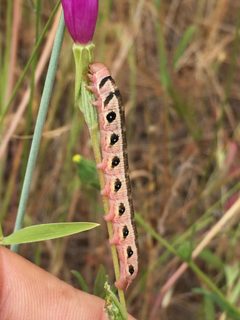
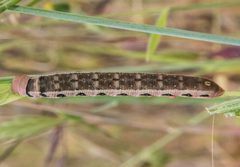
Proserpinus clarkiae, known as Clark's sphinx, is a small sphinx moth in the Sphingidae. It occurs in western North America from British Columbia to Baja California and eastward to the Rocky Mountain states. fly in spring and feed on nectar from diverse flowering plants, while larvae specialize on Clarkia unguiculata.
Pronunciation
How to pronounce Proserpinus clarkiae: /prɒˈsɛrpɪnəs ˈklɑːrkiaɪ/
These audio files are automatically generated. While they are not always 100% accurate, they are a good starting point.
Identification
Distinguished from other Proserpinus by the reduced or absent basal orange on the forewing underside. The pale orange to yellowish hindwing with black marginal band separates it from species with more extensively colored wings. Small wingspan (30–38 mm) relative to many sphinx moths.
Images
Appearance
Small sphinx moth with wingspan of 30–38 mm. Forewing underside lacks or has only basal orange coloration. Hindwing upperside pale orange to yellowish with black marginal band.
Habitat
Oak woodland and pine–oak woodland in foothill regions.
Distribution
Western North America: British Columbia and Washington south through California to Baja California, east to Idaho, Wyoming, and Utah. Distribution records also indicate presence in Alberta, Canada.
Seasonality
active from mid-March to June. Single per year.
Diet
feed on nectar of Salvia columbariae, Asclepias cordifolia, Ribes aureum, Dipterostemon capitatus, Clarkia, Vicia, Cirsium, and Stachys . Larvae feed on Clarkia unguiculata.
Host Associations
- Clarkia unguiculata - larval plantsole documented larval food source
Life Cycle
One per year. Larval stage feeds on Clarkia unguiculata. and stage not documented in available sources.
Behavior
are or nectar feeders, visiting diverse flowering plants. period coincides with spring bloom of plants and nectar sources.
Ecological Role
function as of multiple flowering plant . Larvae are herbivores on Clarkia unguiculata.
Human Relevance
Documented in entomological collections and citizen science observations. No significant economic or agricultural impact reported.
Similar Taxa
- Other Proserpinus speciesShare -level characteristics but differ in forewing underside coloration and hindwing pattern
More Details
Nectar plant diversity
have been documented feeding on at least eight different plant , indicating dietary breadth at the adult stage contrasting with larval specialization.