
Hyles
Hübner, 1819
Hawkmoths, Hummingbird moths
Species Guides
3- Hyles euphorbiae(spurge hawk-moth)
- Hyles gallii(Bedstraw Hawkmoth)
- Hyles lineata(white-lined sphinx)
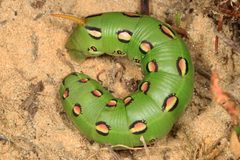
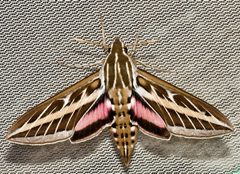
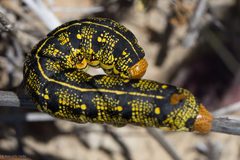
Hyles is a of hawkmoths in the Sphingidae, commonly referred to as 'hummingbird moths' due to their and size. The genus includes approximately 30 described distributed across North America, Eurasia, Africa, and Australia. Hyles species are characterized by their large size, rapid hovering flight, and often striking wing patterns. The white-lined sphinx (Hyles lineata) is among the most widespread and frequently encountered species in North America.
Pronunciation
How to pronounce Hyles: /ˈhaɪliːz/
These audio files are automatically generated. While they are not always 100% accurate, they are a good starting point.
Images
Distribution
Hyles occur across multiple continents. Hyles lineata ranges from southern Canada through the United States and Mexico to Central and South America (Argentina, Colombia, Ecuador, Peru, Uruguay, Venezuela), with or related in the Galapagos, Hawaii, and Australia. Hyles livornica occurs in Eurasia and Africa. Other species occupy more restricted ranges: H. nicaea in the Altai Mountains and Central Asia, H. hippophaeas in parts of Eurasia, H. centralasiae in Mongolia and adjacent regions, and H. gallii across northern Eurasia and North America.
More Details
Taxonomic notes
The Hyles was established by Hübner in 1819. Some have been treated under the synonym Celerio in older literature. The relationship between Hyles lineata and H. livornica has been subject to taxonomic debate, with some authorities treating them as or as a . The genus belongs to the tribe Macroglossini within Macroglossinae.
Research significance
Hyles , particularly H. lineata, are frequently studied for their biomechanics, hovering ability, and as model organisms for insect-plant interactions. Their wide distribution and abundance make them accessible for ecological and behavioral research.
Sources and further reading
- BugGuide
- Wikipedia
- GBIF taxonomy match
- iNaturalist taxon
- NCBI Taxonomy
- Catalogue of Life
- Ready for Moth Night at UC Davis? | Bug Squad
- A Buggy New Year! | Bug Squad
- Oh, What a (Moth) Night This Will Be! A Conversation With Bohart's Lepidoptera Curator Jeff Smith | Bug Squad
- Don't Miss Bohart Museum Open House on Nov. 2 | Bug Squad
- 'A Night at the Bohart Museum' to Celebrate Moths and Other Insects | Bug Squad
- Bug Eric: White-lined Sphinx ("Hummingbird Moth")
- Hyles lineata . [Distribution map].
- NEW DATA ON THE DISTRIBUTION OF HAWK-MOTHS OF THE GENUS HYLES HÜBNER, [1819] (LEPIDOPTERA: SPHINGIDAE)