
Euproserpinus phaeton
Grote & Robinson, 1865
Phaeton primrose sphinx moth, Phaeton Primrose Sphinx
Euproserpinus phaeton is a medium-sized sphinx moth (Sphingidae) native to arid regions of southwestern North America. are nectar-feeders, flying rapidly close to ground level over desert washes and flats during early spring. The has a single and is dependent on Onagraceae plants for larval development. Its restricted activity period and specific requirements make it a notable component of spring desert .
Pronunciation
How to pronounce Euproserpinus phaeton: //ˌjuːprəˈsɜːrpɪnəs ˈfiːtɒn//
These audio files are automatically generated. While they are not always 100% accurate, they are a good starting point.
Identification
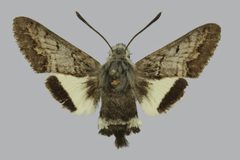
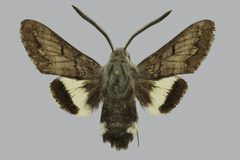
Distinguished from other Euproserpinus by the combination of creamy white abdominal side-tufts, discontinuous white band, and the straight (not curved) marginal black band on the hindwing upperside. The absence of transverse lines in the forewing area and lack of black scaling at the base of the hindwing underside further separate it from . and early spring activity period are additional field marks.
Images
Habitat
Arid desert environments, specifically dry washes and flat desert areas. occurs close to ground surface in open, sparsely vegetated terrain.
Distribution
North America: California south through Baja California Sur and mainland Mexico; disjunct in south-western Arizona.
Seasonality
active February to April. Single per year.
Diet
Larvae feed on various of Onagraceae (evening primrose ). nectar at flowers during daytime.
Life Cycle
(one annually). Larval development on Onagraceae ; and activity restricted to early spring months.
Behavior
fly swiftly and maintain low altitude close to the ground. nectar-feeding at flowers.
Ecological Role
function as of desert flowers. Larvae serve as herbivores on Onagraceae vegetation.
Similar Taxa
- Other Euproserpinus speciesDistinguished by specific wing pattern elements: straight vs. curved hindwing marginal band, presence/absence of abdominal tuft coloration, and forewing line patterns.