
Eumorpha intermedia
Clark, 1917
Intermediate Sphinx
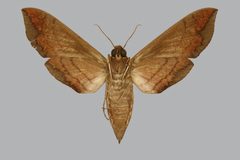
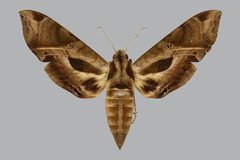
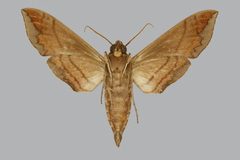
Eumorpha intermedia is a sphinx moth (Sphingidae) described by Benjamin Preston Clark in 1917. It is found in the southeastern United States, with active from spring through fall. The is most readily distinguished from close relatives by wing coloration and pattern, particularly the pink-tinged forewing underside. Larvae feed on woody vines in the grape .
Pronunciation
How to pronounce Eumorpha intermedia: //juːˈmɔːrfə ˌɪntərˈmiːdiə//
These audio files are automatically generated. While they are not always 100% accurate, they are a good starting point.
Identification
Most similar to Eumorpha satellitia licaon and Eumorpha pandorus. Distinguished from E. pandorus by the pink-tinged forewing underside. Distinguished from E. satellitia licaon by more subtle differences in hindwing upperside coloration and overall wing pattern. The combination of dark brown forewings with pink-tinged undersides is diagnostic for this within its range.
Images
Appearance
Medium to large sphinx moth with wingspan 90–98 mm. Forewings are narrow and elongated, dark brown with variable patterning. Forewing underside is dark brown with a distinct pink tinge, especially pronounced on the hindwing. Hindwing upperside is similar in coloration to Eumorpha satellitia licaon. Body is robust and streamlined, typical of fast-flying sphingid .
Habitat
Found in subtropical and warm temperate regions of the southeastern United States. Associated with supporting its larval plants, including woodland edges, riparian corridors, and areas with climbing vines. frequent areas with abundant flowering plants for nectar.
Distribution
United States: North Carolina, Florida, Mississippi, Louisiana, and southern Texas. Range corresponds to the Gulf and Atlantic coastal plains.
Seasonality
active from April to October, with peak activity during summer months. Single or multiple likely depending on latitude and local climate conditions.
Diet
nectar at various flowers. Larvae feed on Ampelopsis arborea (peppervine) and possibly Vitis (grapes).
Host Associations
- Ampelopsis arborea - larval primary plant
- Vitis - possible larval unconfirmed but suspected based on related
Life Cycle
Complete with , larva, pupa, and stages. Eggs laid on plant foliage. Larvae are hornworms (typical of Sphingidae), likely with five instars. probably occurs in soil or leaf litter. Adults emerge in spring and are active through fall, suggesting at least partial multivoltinism in warmer portions of range.
Behavior
are to , with strong, fast typical of sphinx moths. They hover while feeding at flowers. Larvae are solitary feeders on plant foliage.
Ecological Role
function as while nectaring. Larvae serve as herbivores, consuming foliage of woody vines. Both life stages provide food for various and .
Human Relevance
No significant economic impact. Occasionally encountered by naturalists and enthusiasts. Larvae may cause minor defoliation of ornamental vines but are not considered pests.
Similar Taxa
- Eumorpha pandorusSimilar size and overall wing shape, but lacks pink tinge on forewing underside; has more greenish coloration and different spot pattern
- Eumorpha satellitia licaonVery similar in hindwing upperside coloration; distinguished by subtle differences in forewing pattern and underside coloration
More Details
Taxonomic history
Described as a distinct by Clark in 1917 based on specimens from the southeastern United States. Has been treated as intermediate in appearance between E. pandorus and E. satellitia, hence the specific epithet 'intermedia'.
Sources and further reading
- BugGuide
- Wikipedia
- GBIF taxonomy match
- iNaturalist taxon
- Catalogue of Life
- Grasshopper Collections and Survey
- Hear That Buzz? Meet the Master Beekeeper | Bug Squad
- The Big 43: The California Native Plants, Plus One, Studied in UC Davis Research | Bug Squad
- Grasshoppers of Colorado
- Lewis Ocean Bay Heritage Preserve & Wildlife Management Area | Beetles In The Bush
- flatworms | Blog