
Deilephila
Laspeyres, 1809
elephant hawk moth
Species Guides
1- Deilephila elpenor(Elephant Hawk-moth)
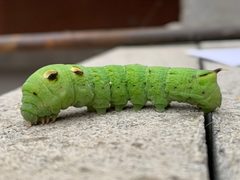
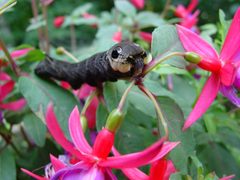
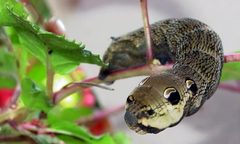
Deilephila is a of hawk moths (Sphingidae) containing several Palearctic known as elephant hawk moths. The genus was established by Laspeyres in 1809. Species within this genus are recognized for their bright coloration, including the pink and green elephant hawk moth (D. elpenor). The larvae exhibit a distinctive defensive where they retract their and segments into swollen abdominal segments bearing eyespots. are with long adapted for feeding on nectar from tubular flowers.
Pronunciation
How to pronounce Deilephila: /ˌdaɪləˈfaɪlə/
These audio files are automatically generated. While they are not always 100% accurate, they are a good starting point.
Identification
can be distinguished from the related and larger Hyles by their more distinct eyelashes and less strongly chitinized abdominal spines. Larvae are identified by their reduced terminal horn and the unique ability to retract and segments into enlarged abdominal segments bearing eyespots—a defensive posture not seen in typical hawk moth caterpillars. -level identification requires examination of size, color pattern, and genitalia.
Images
Habitat
Found in diverse environments including gardens, woodland edges, rough grassland, and hedgerows. Larval plants from Onagraceae and Rubiaceae influence local distribution. are attracted to nectar-rich flowers, particularly those with tubular corollas.
Distribution
Palearctic distribution. Records from Denmark, Norway, and Sweden confirmed. The extends across Europe and into Asia, with individual showing varying range extents.
Seasonality
are active during summer months. Exact timing varies by and latitude. D. elpenor is typically on the wing from May to August in temperate regions, with peak activity in June and July.
Diet
feed on nectar from flowers, particularly those with long corollas. Larvae feed mainly on plants of the Onagraceae and Rubiaceae.
Life Cycle
Complete with , larva, pupa, and stages. Eggs are pale green. Larvae develop through several instars, feeding on plants before pupating in soil or leaf litter. Adults emerge to mate and feed on nectar. Some may have partial second in favorable conditions.
Behavior
are primarily but may be active at dusk. They are capable of rapid, sustained and hover at flowers while feeding. Larvae exhibit a distinctive defensive : when disturbed, they retract their and segments into the first two abdominal segments, which swell to display prominent eyespots, creating a snake-like appearance to deter . Adults have been studied for learning and color vision capabilities.
Ecological Role
function as , transferring pollen while feeding on nectar from tubular flowers. Their long allow access to nectar in deep corollas, facilitating pollination of plant that may be less accessible to shorter-tongued insects.
Human Relevance
Larvae are sometimes found in gardens and can cause minor damage to cultivated plants, though they are not considered significant agricultural pests. The bright coloration of , particularly D. elpenor, makes them popular among naturalists and photographers. The serves as a model organism for studies of insect vision, learning, and .
Similar Taxa
More Details
Taxonomic Note
The oleander hawk moth is sometimes classified as Deilephila nerii but is now generally treated in the Daphnis as D. nerii.
Research Significance
D. elpenor has been used as a model organism in studies of insect learning, color vision, and computational modeling of .