
Phryxus caicus
Cramer, 1777
Caicus Sphinx
Phryxus caicus is a sphinx moth and the sole in its . It occurs primarily in the Neotropics with occasional records from the southeastern United States. fly mainly during late summer and fall in temperate regions, though activity may continue year-round in tropical areas. Larvae feed on plants in the dogbane .
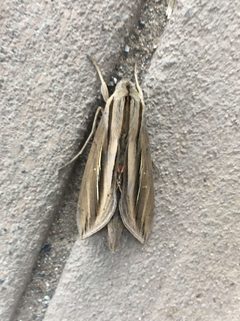
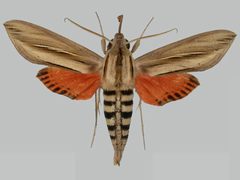
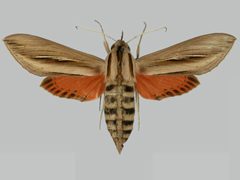
Pronunciation
How to pronounce Phryxus caicus: //ˈfrɪksəs ˈkaɪkəs//
These audio files are automatically generated. While they are not always 100% accurate, they are a good starting point.
Identification
The forewings measure 33–37 mm in length. As a member of the Dilophonotini tribe, it shares characteristics with other neotropical sphinx moths in this group. Specific diagnostic features distinguishing it from similar are not documented in available sources.
Images
Distribution
Native to the Neotropics. Recorded throughout much of Brazil (Acre, Alagoas, Amazonas, Amapá, Bahia, Ceará, Distrito Federal, Espírito Santo, Goiás, Maranhão, Minas Gerais, Mato Grosso do Sul, Mato Grosso, Pará, Paraíba, Pernambuco, Piauí, Paraná, Rio de Janeiro, Rio Grande do Norte, Rondônia, Roraima, Rio Grande do Sul, Santa Catarina, Sergipe, São Paulo, Tocantins). Also recorded from Villavicencio, Colombia. In North America, documented from southern Florida and South Carolina.
Seasonality
In Florida and areas north of the core neotropical range, are mainly active from August to November. In tropical regions, adults may be found year-round.
Diet
Larvae feed on Apocynaceae . In Florida, recorded on Rhabdadenia biflora. Tropical records are to level only (Apocynaceae).
Host Associations
- Rhabdadenia biflora - larval Florida record
- Apocynaceae - larval tropical records, -level identification
Similar Taxa
- Other DilophonotiniShares tribe-level characteristics; specific distinguishing features for Phryxus caicus are not documented