
Isognathus rimosa
Grote, 1865
Rimosus Sphinx
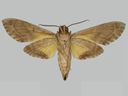
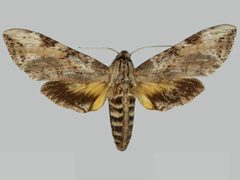
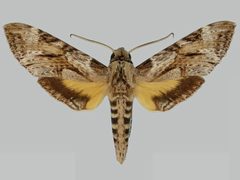
Isognathus rimosa, commonly known as the Rimosus Sphinx, is a hawk moth (Sphingidae) first described by Augustus Radcliffe Grote in 1865. The occurs across tropical and subtropical regions from northern Brazil through Central America, the West Indies, and Mexico to southern Arizona. have a wingspan of 70–102 mm and feed on flower nectar, including petunias. Larvae specialize on Plumeria species.
Pronunciation
How to pronounce Isognathus rimosa: /ˌaɪ.soʊˈnæθ.əs ˈraɪ.moʊ.sə/
These audio files are automatically generated. While they are not always 100% accurate, they are a good starting point.
Identification
The can be distinguished from other Isognathus by geographic range and association with Plumeria plants. The Isognathus rimosa rimosa is the only form occurring in the United States (southern Arizona), which may aid identification. Accurate identification to species level may require examination of genitalia or molecular methods.
Images
Habitat
Tropical and subtropical climates. In the United States, restricted to southern Arizona. Specific microhabitat preferences not documented.
Distribution
Northern Brazil north through Central America, the West Indies, and Mexico to southern Arizona. Multiple occupy different portions of this range: I. r. rimosa (northern Brazil to southern Arizona), I. r. inclitus (Mexico to Nicaragua), I. r. jamaicensis (Jamaica), I. r. molitor (Haiti), I. r. papayae (French Guiana, Venezuela to Brazil), and I. r. wolcotti (Puerto Rico).
Seasonality
Multiple per year in tropical portions of range. In Arizona, have been recorded in August. Specific periods elsewhere not documented.
Diet
feed on flower nectar, including petunias. Larvae feed on Plumeria rubra, Plumeria alba, and Plumeria obtusa (Apocynaceae).
Host Associations
- Plumeria rubra - larval food plantRecorded in Cuba and Puerto Rico
- Plumeria alba - larval food plantRecorded in Puerto Rico
- Plumeria obtusa - larval food plantRecorded in Puerto Rico
Life Cycle
Multiple per year in tropics. Specific details of , larval, pupal, and stages not documented beyond plant associations and adult times.
Behavior
are nectar feeders. No other specific documented.
Ecological Role
function as while feeding on nectar. Larvae are herbivores specializing on Plumeria . Specific ecological impacts not quantified.
Human Relevance
visit petunia flowers in gardens, suggesting potential minor role as of ornamental plants. No economic or medical significance documented.
Similar Taxa
- Other Isognathus speciesSame , similar ; distinguished by geographic distribution and plant associations
- Other Sphingidae in tropical AmericasSimilar size and ; I. rimosa distinguished by specific Plumeria larval association
More Details
Subspecies diversity
Six recognized, occupying distinct geographic regions from Caribbean islands to mainland Central and South America. The nominate subspecies I. r. rimosa is the only form reaching the United States.
Sources and further reading
- BugGuide
- Wikipedia
- GBIF taxonomy match
- iNaturalist taxon
- NCBI Taxonomy
- Catalogue of Life
- Another look at North America’s most beautiful longhorned beetle | Beetles In The Bush
- Periodical Cicadas, 2024: Entomologists Prepare for the Six-Week Serenade
- New Research Reveals How Flesh Flies Hear
- North America’s smallest cicada | Beetles In The Bush