
Erinnyis obscura
Fabricius, 1775
Obscure Sphinx
Erinnyis obscura is a sphinx moth (Sphingidae) with broad distribution from northern South America through Central America, Mexico, and the West Indies to the southern and central United States. fly year-round in tropical and subtropical regions. Larvae feed on plants in Apocynaceae, Asclepiadaceae, and spurge . The includes three recognized : the nominate form, E. o. conformis (Galapagos Islands), and E. o. socorroensis (Revillagigedo Islands). Stray individuals have been recorded as far north as New York, suggesting greater capacity than previously recognized.
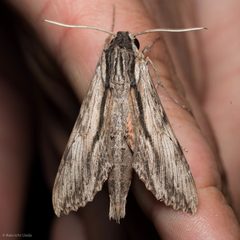
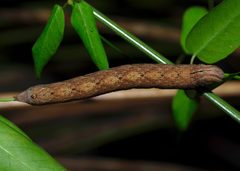
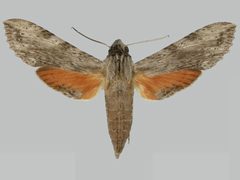
Pronunciation
How to pronounce Erinnyis obscura: //əˈrɪnɪɪs ɒbˈskjʊərə//
These audio files are automatically generated. While they are not always 100% accurate, they are a good starting point.
Images
Distribution
Northern South America through Central America, Mexico, and the West Indies to the southern and central United States. E. o. obscura: tropical and subtropical lowlands from Uruguay west to Bolivia and Argentina, north through Central America, Mexico, and the West Indies to Florida, Mississippi, Texas, New Mexico, Arizona, and southern California. Strays recorded to Arkansas, Oklahoma, Nebraska, North Dakota, and Pennsylvania. Subspecies E. o. conformis: Galapagos Islands. Subspecies E. o. socorroensis: Revillagigedo Islands.
Seasonality
are on wing year-round in the tropics, southern Florida, and southern Texas.
Diet
Larvae feed on various members of Apocynaceae including Rauvolfia ligustrina, Rauvolfia tetraphylla, Stemmadenia obovata, Philibertia, Cynanchum, and Carica papaya; also Asclepiadaceae and spurge including Blepharodon mucronatum, Funastrum clausum, and Morrenia odorata.