
Aellopos tantalus
Linnaeus, 1758
Tantalus Sphinx
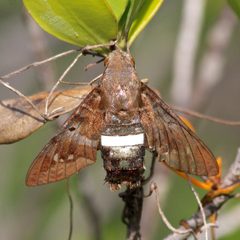
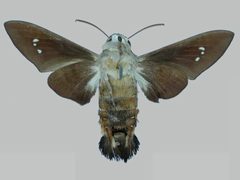
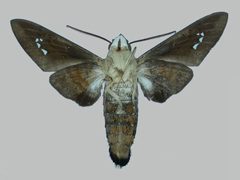
Aellopos tantalus, commonly known as the Tantalus sphinx, is a small hawkmoth in the Sphingidae. are active year-round in tropical and subtropical regions, feeding on nectar from specific flowering plants. The larvae develop on Rubiaceae plants and pupate in shallow underground chambers or leaf litter.
Pronunciation
How to pronounce Aellopos tantalus: //ˈaɪ.lə.pɒs ˈtæn.tə.ləs//
These audio files are automatically generated. While they are not always 100% accurate, they are a good starting point.
Identification
Distinguished from other Aellopos by geographic range and association with specific plants; A. tantalus is the primary species in Florida and the northern Caribbean. A. t. zonata occurs on St. Kitts and in Mexico. Precise wing pattern differences between Aellopos species require examination.
Images
Appearance
Medium-small hawkmoth with wingspan 45–57 mm. Forewings narrow and pointed, typical of the . Coloration and pattern details not specified in sources.
Habitat
Tropical and subtropical environments including coastal areas, forests, and disturbed where plants and nectar sources occur. Found from sea level to low elevations in the Amazon basin and Caribbean islands.
Distribution
Florida (USA), Caribbean Antilles, Mexico, Venezuela, Colombia, Ecuador, Suriname, and Amazon basin. Two recognized: nominate A. t. tantalus and A. t. zonata (St. Kitts and Mexico).
Seasonality
active year-round; no seasonal dormancy reported. Continuous breeding likely in tropical portions of range.
Diet
feed on nectar of Eugenia axillaris, Dracaena fragrans, and Ernodea littoralis. Larvae feed on Rubiaceae including Casasia clusiifolia and Randia .
Host Associations
- Casasia clusiifolia - larval food plantRubiaceae
- Randia aculeata - larval food plantRubiaceae
- Eugenia axillaris - nectar source
- Dracaena fragrans - nectar source
- Ernodea littoralis - nectar source
Life Cycle
Complete : , larva, pupa, . occurs in loose cocoons within shallow underground chambers or in leaf litter. No reported; continuous in tropical .
Behavior
are or nectar feeders, hovering at flowers. Strong, direct typical of hawkmoths.
Ecological Role
function as of recorded nectar plants. Larvae are herbivores that consume Rubiaceae foliage, contributing to nutrient cycling.
Human Relevance
Occasional attraction to cultivated ornamental plants (Dracaena fragrans). Not considered an agricultural pest.
Similar Taxa
- Aellopos clavipesOverlaps in range; requires examination of wing pattern and genitalia for definitive identification
- Aellopos titanLarger with different distribution; have distinct forewing pattern
More Details
Subspecies
A. t. zonata (Drury, 1773) occurs on St. Kitts and in Mexico, distinguished by distribution and subtle pattern differences