
Aellopos titan
Cramer, 1777
Titan Sphinx
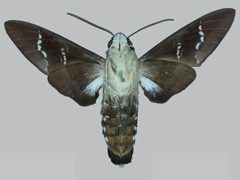
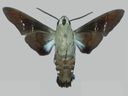
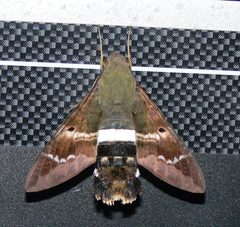
Aellopos titan, commonly known as the Titan Sphinx, is a in the Sphingidae. The was first described by Pieter Cramer in 1777. It is a medium-sized hawkmoth with a wingspan of 55–65 mm, found across a broad geographic range from North America through Central America to South America.
Pronunciation
How to pronounce Aellopos titan: //ˈaɪloʊpəs ˈtaɪtæn//
These audio files are automatically generated. While they are not always 100% accurate, they are a good starting point.
Identification
Distinguished from other Aellopos by combination of geographic distribution and wing pattern; however, specific diagnostic characters not detailed in available sources. The Aellopos contains several similar species, and precise identification may require examination of genitalia or detailed wing pattern analysis.
Images
Appearance
Medium-sized hawkmoth with wingspan 55–65 mm. Forewings narrow and pointed, typical of fast-flying sphingid . Patterning and coloration details not specified in available sources.
Habitat
Specific preferences not documented in available sources. As a member of Sphingidae, likely associated with areas supporting larval plants.
Distribution
Broad Neotropical and southern Nearctic distribution. Recorded from Maine, United States, south through Central America to Argentina and Uruguay in South America. Aellopos titan titan occurs in Brazil; Aellopos titan cubana restricted to Cuba.
Behavior
typical of Sphingidae; specific behavioral observations not documented in available sources.
Similar Taxa
- Other Aellopos speciesSimilar body form and wing shape; require detailed examination for separation
More Details
Subspecies
Two recognized: Aellopos titan titan (Brazil) and Aellopos titan cubana (Cuba, described by Clark, 1936)
Sources and further reading
- BugGuide
- Wikipedia
- GBIF taxonomy match
- iNaturalist taxon
- NCBI Taxonomy
- Catalogue of Life
- Covering Biodemography and Trail-Blazing the Emerging Field | Bug Squad
- entomology | Blog - Part 8
- Can Vibrational Noise Be Used to Control Grapevine Leafhoppers?
- Big is Best but not for Bugs - Buglife Blog - Buglife
- Fathers Day at the Missouri Botanical Garden | Beetles In The Bush