
Aellopos fadus
Cramer, 1776
Fadus Sphinx
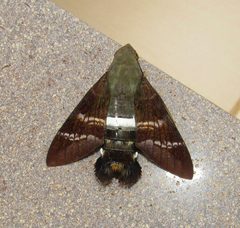
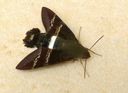
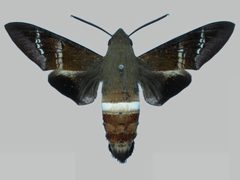
Aellopos fadus, known as the Fadus Sphinx, is a medium-sized hawkmoth in the Sphingidae. It occurs in tropical regions of Central and northern South America, where are active year-round. The was first described by Pieter Cramer in 1776.
Pronunciation
How to pronounce Aellopos fadus: /ˈaɪləpoʊs ˈfædəs/
These audio files are automatically generated. While they are not always 100% accurate, they are a good starting point.
Identification
The wingspan of 57–60 mm distinguishes it from larger Aellopos . Definitive identification requires examination of wing pattern and body markings; consult specialized sphingid keys for the Aellopos.
Images
Appearance
Medium-sized hawkmoth with a wingspan of 57–60 mm. As a member of the Aellopos, it exhibits the streamlined body and narrow, pointed wings characteristic of sphingid adapted for rapid, sustained .
Habitat
Tropical environments in Central and northern South America. Specific microhabitat preferences are not well documented.
Distribution
Central America and northern South America. GBIF records confirm presence in Brazil (Amazonas, Maranhão, Minas Gerais, Mato Grosso, Pará, Pernambuco, Paraná, Rio de Janeiro, Roraima, Rio Grande do Sul, São Paulo), with additional records from the Caribbean and North America.
Seasonality
are active year-round in tropical regions.
Diet
feed on nectar from various flowers, including Abelia . Larval plants are not documented in available sources.
Host Associations
- Abelia - ADULT_FOOD_SOURCE nectar source
Behavior
are known to visit flowers for nectar. and other habits are consistent with the general hawkmoth pattern of rapid, hovering flight, though specific behavioral observations are not documented.
Ecological Role
function as when feeding on nectar at flowers.
Similar Taxa
- Aellopos titanLarger congeneric ; A. titan has a wingspan exceeding 75 mm, distinguishing it from the smaller A. fadus
- Aellopos clavipesSimilar size range; requires examination of wing pattern and abdominal markings for separation
More Details
Taxonomic authorship discrepancy
Sources vary between Cramer, 1775 and Cramer, 1776 for the original description date. The 1776 date appears in primary sources cited by Wikipedia and iNaturalist.