
Automeris cecrops
Boisduval, 1875
Cecrops Eyed Silkmoth
Species Guides
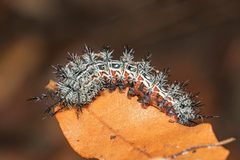
1Automeris cecrops is a saturniid distributed across Central America and North America. possess large eyespots on the hindwings used for defense. Caterpillars bear urticating spines that deliver painful stings when handled. The is one of three recognized within the Automeris cecrops complex.
Pronunciation
How to pronounce Automeris cecrops: /ˌɔːtoʊˈmɛrɪs ˈsiːkrɒps/
These audio files are automatically generated. While they are not always 100% accurate, they are a good starting point.
Identification
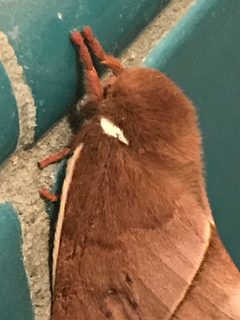
Distinguished from other Automeris by geographic range and wing pattern details; precise identification may require examination of genitalia or reference to subspecific classification. The eyespot pattern on hindwings differs among Automeris species. Males identified by large, bipectinate compared to females.
Images
Habitat
Found in varied environments across its range including tropical and subtropical forests. Larval include diverse trees, vines, and shrubs.
Distribution
Central America and North America. Records from Middle America and North America.
Seasonality
active during warmer months; timing varies by latitude. Single per year throughout most of range.
Diet
Larvae feed on leaves of multiple plants including various trees, vines, and shrubs. Specific host plant records are limited in the provided sources.
Life Cycle
Overwinters as pupa within silken cocoon. emerge with return of warm weather. Females deposit in clusters on leaves. Caterpillars pass through multiple instars with dramatic color changes, gaining over 1000 times birth weight. Single annually across most of range.
Behavior
use startle display: at rest, forewings conceal eyespots; when threatened, wings spread to reveal large hindwing eyespots to deter . Caterpillars employ urticating spines for defense. Males use feathery to detect female over considerable distances.
Ecological Role
Larval herbivore; contributes to nutrient cycling through herbivory. Serves as prey for various ; eyespots and larval stinging spines represent anti-predator adaptations. Potential prey for flies.
Human Relevance
Caterpillar stings cause painful, long-lasting reactions in humans; handling is not recommended. Stings may provoke serious allergic reactions in sensitive individuals. Subject of natural history observation and photography. MONA/Hodges number 7748.
Similar Taxa
- Automeris io (Io moth)Overlaps in North American range and shares eyespot defense; differs in specific wing pattern and geographic distribution details.
- Hyalophora cecropia (Cecropia moth)Similar causing confusion; belongs to different within Saturniidae, much larger, lacks urticating caterpillar spines, different eyespot structure.
Misconceptions
The 'cecrops eyed silkmoth' creates potential confusion with Hyalophora cecropia, the 'cecropia moth' or 'cecropia silkmoth'—a different, larger in the same but different .
More Details
Subspecies
Three recognized: Automeris cecrops cecrops (Boisduval, 1875), Automeris cecrops pamina (Neumoegen, 1882), and Automeris cecrops peigleri Lemaire, 1981.
Conservation concerns
Related Automeris have declined in parts of North America due to destruction and by the introduced fly Compsilura concinnata, originally released for gypsy moth biocontrol. Similar threats may affect A. cecrops though specific data are not provided in sources.