
Olceclostera angelica
(Grote, 1864)
Angel Moth
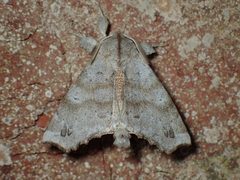
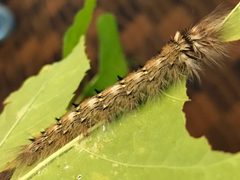
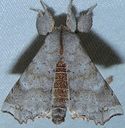
Olceclostera angelica, the angel , is a small to medium-sized moth in the Apatelodidae. First described by Augustus Radcliffe Grote in 1864, it occurs across eastern North America from Quebec and Maine south to Florida, west to Texas, and north to Wisconsin and Ontario. are active from May through September in deciduous forest . The larval stage feeds specifically on ash (Fraxinus) and lilac (Syringa) leaves.
Pronunciation
How to pronounce Olceclostera angelica: //ɒlsɛˈklɒstərə ænˈd͡ʒɛlɪkə//
These audio files are automatically generated. While they are not always 100% accurate, they are a good starting point.
Identification
The combination of modest size (32–42 mm wingspan), occurrence in eastern North American deciduous forests, and period from May to September may help distinguish this from related apatelodids. However, specific diagnostic features separating O. angelica from such as O. magniplaga or O. seraphica are not documented in available sources. Identification likely requires examination of genitalia or larval association.
Images
Appearance
have a wingspan of 32–42 mm (1.3–1.7 in). Specific coloration and pattern details of adults are not well documented in available sources. Larval has not been described in the provided references.
Habitat
Deciduous forests. Specific microhabitat preferences within forests are not documented.
Distribution
North America: Quebec and Maine south to Florida, west to Texas, north to Wisconsin and Ontario. Distribution records from GBIF also include Vermont.
Seasonality
are on wing from May to September. Larval is not documented.
Diet
Larvae feed on leaves of Fraxinus (ash) and Syringa (lilac) . feeding habits are not documented.
Host Associations
- Fraxinus - larval food plantlarvae feed on leaves
- Syringa - larval food plantlarvae feed on leaves
Ecological Role
As a folivorous larva, contributes to nutrient cycling in deciduous forest . Specific ecological interactions are not documented.
Similar Taxa
- Olceclostera magniplagaSimilar size range and eastern North American distribution; specific distinguishing features not documented in available sources
- Olceclostera seraphicaCongeneric with overlapping range; identification requires detailed morphological examination
More Details
Taxonomic note
placement has varied historically; some sources list this in , but current classifications (iNaturalist, GBIF, Catalogue of Life) place it in Apatelodidae.
Research gaps
Detailed descriptions of , larval stages, sites, and specific behavioral traits appear to be lacking in accessible literature.
Sources and further reading
- BugGuide
- Wikipedia
- GBIF taxonomy match
- iNaturalist taxon
- Catalogue of Life
- A Summit to Save the Butterflies | Bug Squad
- A new Critically Endangered frog named after “the man from the floodplain full of frogs” | Blog
- National Meadows Day 2023 in England - Buglife Blog - Buglife
- Winter Botany Quiz #6 – answers and a checklist | Beetles In The Bush
- Hitchin' a Ride: A Review of Firewood as a Vector of Forest Pests in North America
- New species of owl discovered on Príncipe Island