
Alucita
Linnaeus, 1758
many-plumed moths
Species Guides
2- Alucita adriendenisi
- Alucita montana(Montana Six-plume Moth)
Alucita is the largest and type of many-plumed moths ( Alucitidae), containing approximately 180 with new species continuing to be described. The genus occurs almost worldwide, though individual species have more restricted ranges. Members are distinguished by their unique wing , with each wing divided into multiple feather-like plumes. The genus was established by Linnaeus in 1758 and has historically been subject to taxonomic revision, with several junior synonyms proposed by subsequent authors.
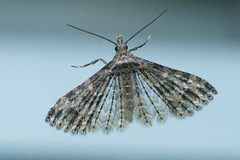
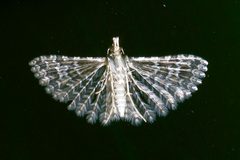
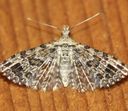
Identification
Wings divided into six (rarely fewer) feather-like plumes with deeply cleft margins, creating a fringed appearance unlike typical scaled Lepidoptera wings. Wing pattern often includes white, brown, and black chevron markings. Small size: wingspans typically 10–20 mm. . At rest, wings are often held in a tent-like or slightly spread posture, displaying the plumed structure.
Images
Habitat
vary by but frequently include gardens, woodlands, and shrublands where plants in Caprifoliaceae occur. Specific associations include areas with Lonicera (honeysuckle) and Symphoricarpos (snowberry).
Distribution
occurs almost worldwide. Representative distributions: Alucita hexadactyla widespread across UK and Ireland; Alucita montana from southwestern Quebec and Vermont west to British Columbia, south to Arizona, California, and Texas; Alucita adriendenisi from northwestern Quebec and New York to Alberta and Northwest Territories, with isolated southern in West Virginia, Arizona, and Texas; Alucita lalannei in Ontario, Manitoba, and Alberta, Canada.
Seasonality
activity varies by and latitude. Alucita hexadactyla flies throughout the year in the UK, with peak activity in warmer months. North American species active during summer months.
Diet
Larvae feed on buds, flowers, and leaves of Caprifoliaceae. Documented plants include Lonicera caprifolium, L. periclymenum, L. xylosteum, L. dioica, and Symphoricarpos spp. feeding habits not documented.
Host Associations
- Lonicera caprifolium - larval buds, flowers, and leaves
- Lonicera periclymenum - larval buds, flowers, and leaves
- Lonicera xylosteum - larval buds, flowers, and leaves
- Lonicera dioica - larval flowers; confirmed in Michigan
- Symphoricarpos spp. - larval associated with caterpillars
Life Cycle
Complete with , larva, pupa, and stages. Larvae feed on plant reproductive and vegetative tissues. site not explicitly documented in available sources.
Behavior
attracted to light, frequently observed at windows and artificial lights around buildings. Wing structure with multiple feather-like plumes may function in reducing detectability to bat echolocation by decreasing the intensity of ultrasonic echo returns.
Ecological Role
Larvae act as herbivores on Caprifoliaceae, potentially influencing flower and fruit production of plants. Role in as prey for including bats.
Human Relevance
Alucita hexadactyla sequenced as first chromosomally complete assembly for Alucitidae and superfamily Alucitoidea (878.53 Mb, 30 chromosomal pseudomolecules). Some of minor interest to lepidopterists due to distinctive . Not known as agricultural pests.
Similar Taxa
- Pterophoridae (plume moths)Also have divided wings, but typically with 2–3 plumes per wing rather than 6; historically confused with Alucitidae but now placed in separate superfamily
- CopromorphoideaFormerly included now placed in Alucita; distinguished by wing venation and genitalia characters
More Details
Taxonomic history
Established as subgenus of Phalaena by Linnaeus (1758), elevated to by Fabricius (1775). Alternative name Orneodes (Latreille, 1796) was used for an extended period but is now recognized as a junior synonym. Formerly included many now assigned to and Pterophoroidea.
Genomic resources
Chromosomally complete available for Alucita hexadactyla: 878.53 Mb assembly, 99.74% scaffolded into 29 plus Z , 15.32 kb mitochondrial genome.
Discovery status
New continue to be described regularly; contains approximately 180 species as of 2011 with ongoing discoveries in regions including Cameroon.