
Pseudomasaris basirufus
Rohwer, 1912
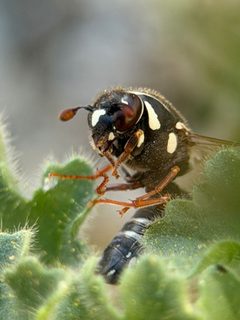
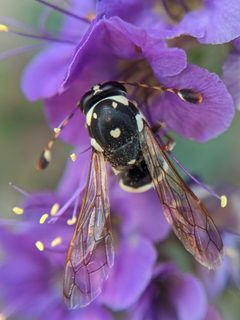
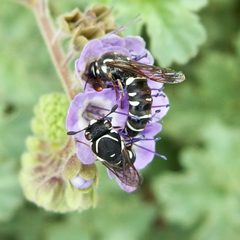
Pseudomasaris basirufus is a solitary pollen wasp in the Masarinae, Vespidae. Like other Pseudomasaris , females construct mud nests provisioned with pollen and nectar rather than paralyzed prey. The species was described by Rohwer in 1912 and is one of approximately 14 species of Pseudomasaris occurring in North America. Pollen wasps are unusual among vespids in their oligolectic pollen-foraging , resembling bees more than typical predatory .
Pronunciation
How to pronounce Pseudomasaris basirufus: /ˌpsjuː.doʊˈmæs.ə.rɪs ˌbeɪ.saɪˈruː.fəs/
These audio files are automatically generated. While they are not always 100% accurate, they are a good starting point.
Images
Diet
Females collect pollen and nectar to provision nest for their larvae. The is oligolectic, meaning it specializes on pollen from a limited range of flowering plants. Based on observations of , likely plants include Penstemon, Phacelia, and Eriodictyon.
Life Cycle
Solitary females construct mud nests, often attached to twigs or beneath stones. Each nest contains multiple provisioned with pollen and nectar. An is laid in each cell, which is then sealed. Larvae develop on the stored provisions. Males typically emerge before females.
Behavior
Males are known to exhibit , perching at elevated locations to encounter females. Males have long, clubbed and may defend territories at hilltop sites. Females forage for pollen and nectar during the day. The is non-aggressive toward humans and lacks the defensive behaviors of social .
Ecological Role
As oligolectic , Pseudomasaris basirufus likely serves as an important pollinator for its plants. The specialized pollen-foraging suggests a mutualistic relationship with specific flowering plant .
Human Relevance
Pollen wasps are generally harmless to humans and do not defend nests aggressively. They may be encountered by hikers and naturalists in western North America during summer months. The mud nests are occasionally observed attached to vegetation.
Similar Taxa
- Pseudomasaris vespoidesSimilar size, coloration, and ; distinguished by distribution and subtle morphological differences in male and abdominal markings.
- Pseudomasaris maculifronsShares male and general appearance; P. maculifrons males have distinctive and different abdominal patterning.