
Zeta
potter wasps
Species Guides
1- Zeta argillaceum(Potter wasp)
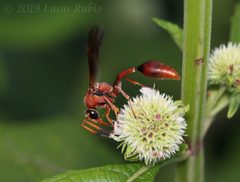
Zeta is a small neotropical of potter wasps in the Eumeninae, Vespidae. The genus currently contains four , with most having restricted geographic distributions. Three species are limited to specific regions: Zeta confusum is to Cuba, Zeta abdominale occurs on several Caribbean islands, and Zeta mendozanum is restricted to the Monte and Patagonia regions of Argentina. Zeta argillaceum is the exception, being widespread and common across much of the neotropics.
Pronunciation
How to pronounce Zeta: /ˈzeː.ta/
These audio files are automatically generated. While they are not always 100% accurate, they are a good starting point.
Identification
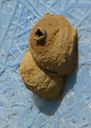
Zeta are potter wasps, distinguished from other vespid by their solitary nesting and the construction of small mud or clay pot-shaped nests. As members of Eumeninae, they possess a narrow petiole (wasp waist) between the and . Specific identification to species level requires examination of morphological characters such as coloration patterns, body proportions, and genitalic structures, with Zeta argillaceum being notably variable in appearance across its broad range.
Images
Habitat
Zeta inhabit neotropical environments. Zeta argillaceum occupies diverse across its widespread range. Zeta mendozanum is associated with the Monte and Patagonia regions of Argentina. Zeta abdominale occurs in Caribbean island including Jamaica, Hispaniola, Puerto Rico, the Virgin Islands, and Antigua. Zeta confusum is restricted to Cuban habitats.
Distribution
The is distributed across the Neotropical region. Zeta confusum: Cuba only. Zeta abdominale: Caribbean Islands (Jamaica, Hispaniola, Puerto Rico, Virgin Islands, Antigua). Zeta mendozanum: Monte and Patagonia regions of Argentina. Zeta argillaceum: widespread across the neotropics.
Host Associations
- caterpillars - preyPotter wasps in Eumeninae provision their nests with paralyzed caterpillars as food for their larvae, though specific records for Zeta are not detailed in available sources.
Behavior
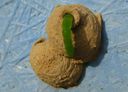
As potter wasps, Zeta are solitary nesters. Females construct small pot-shaped mud or clay nests, provision them with paralyzed caterpillars, and lay a single in each . The larva develops by consuming the stored prey.
Ecological Role
Zeta function as of caterpillars, potentially contributing to natural of lepidopteran in their . As solitary , they are not aggressive toward humans and do not defend large colonies.
Human Relevance
Zeta argillaceum is noted as a very common and widespread , suggesting it may be frequently encountered by people in neotropical regions. Potter wasps generally are not considered pests and are beneficial due to their on caterpillars. No specific economic impacts or medical importance are documented for this .
Similar Taxa
- EumenesBoth are of potter wasps in Eumeninae with similar nest-building ; Eumenes is more diverse and widespread globally, while Zeta is restricted to the Neotropics with fewer .
- other Eumeninae generaMany eumenine share the characteristic pot-shaped nest construction and solitary lifestyle; precise identification requires examination of morphological characters including body proportions, coloration, and genitalic structures.
More Details
Taxonomic history
Zeta is a small with only four currently recognized , making it one of the less diverse genera within the speciose Eumeninae.
Species variability
Zeta argillaceum is described as highly variable in appearance, which may complicate identification and suggests possible cryptic diversity or substantial phenotypic plasticity within this widespread .
Sources and further reading
- BugGuide
- Wikipedia
- iNaturalist taxon
- NCBI Taxonomy
- Catalogue of Life
- Insects that feed on developing grain in the head - AgriLife Extension Entomology
- Insects and mites that feed on leaves - AgriLife Extension Entomology
- A Great Day for Vacaville Kids to Learn About Bees | Bug Squad
- An Eyewitness to the Fall of Saigon and a Glance at Mosquitoes and Malaria | Bug Squad
- Forage Sorghum Insects - AgriLife Extension Entomology
- Hay and Pasture Insects - AgriLife Extension Entomology