
Stenodynerus anormis
(Say, 1824)
Mason wasp
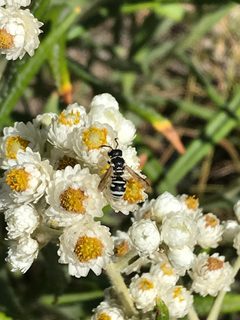
Stenodynerus anormis is a solitary mason wasp in the Eumeninae. The is difficult to distinguish from the related Parancistrocerus based on live specimens or photographs; microscopic examination of actual specimens is often required for positive identification. Females are known to provision nest cavities with paralyzed caterpillars as food for their larval offspring. The species has been documented utilizing artificial nesting structures such as blocks.
Pronunciation
How to pronounce Stenodynerus anormis: /stɛnəˈdaɪnərəs əˈnɔrmɪs/
These audio files are automatically generated. While they are not always 100% accurate, they are a good starting point.
Identification
Externally indistinguishable from Parancistrocerus in most cases; requires microscopic examination of specimens for reliable separation. Males have the last antennal segment modified, appearing like a finger folded up against the adjacent segment. The Stenodynerus generally comprises smaller, more ornately patterned mason wasps compared to some related eumenines.
Images
Habitat
Utilizes pre-existing cavities in dead wood, hollow twigs, or borings for nesting. Has been documented occupying artificial blocks and bee condos. Associated with flowering plants including Saltcedar (Tamarix sp.) where forage for nectar.
Distribution
Documented in Colorado (El Paso County, Colorado Springs area) and California (Benicia). North American distribution; specific range boundaries not well documented in available sources.
Seasonality
active in June based on observation records from Colorado Springs (June 12, 2012) and California (date unspecified but recent enough for photographic documentation).
Diet
Females provision nests with paralyzed caterpillars as larval food. forage for nectar at flowers including Indian hawthorn (Rhaphiolepsis umbellata 'Olivia') and Saltcedar (Tamarix sp.).
Life Cycle
Cavity-nesting : females use pre-existing tunnels, create provisioned with paralyzed caterpillars, lay , and seal cells. Complete details of developmental stages and not documented in available sources.
Behavior
Solitary nesting . Females hunt caterpillars and paralyze them for use as larval provisions. visit flowers for nectar. Both sexes have been observed at artificial nesting structures.
Ecological Role
of caterpillars; contributes to lepidopteran . nectar-foraging may contribute to pollination, though this role is likely incidental rather than specialized.
Human Relevance
Occupies artificial blocks and bee condos installed for conservation, potentially serving as an indicator of structure quality. Not reported as a pest or nuisance .
Similar Taxa
- Parancistrocerus sp.Externally indistinguishable from Stenodynerus in live specimens and most photographs; microscopic examination required for separation.
- Euodynerus spp.Larger mason wasps in the same ; Stenodynerus generally smaller and more ornately patterned.