
Tiphia vernalis
Spring Tiphia
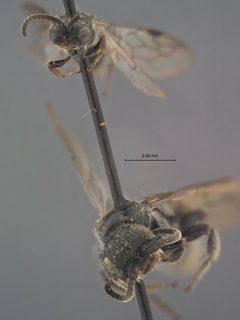
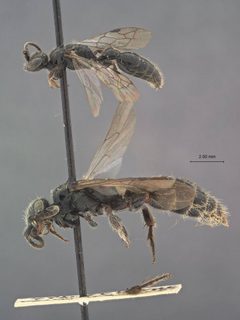
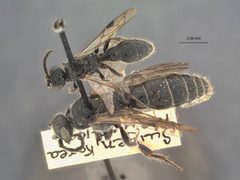
Tiphia vernalis is a in the Tiphiidae, introduced to North America from Korea in the 1920s as a agent for Japanese beetle (Popillia japonica) . The has established populations across the eastern United States, where it parasitizes scarabaeid larvae in soil environments. Females locate below ground using from the grubs and their , then paralyze and parasitize them externally.
Pronunciation
How to pronounce Tiphia vernalis: /ˈtɪ.fi.a vɛrˈna.lɪs/
These audio files are automatically generated. While they are not always 100% accurate, they are a good starting point.
Images
Habitat
Below-ground soil environments where scarabaeid larvae occur; established in agricultural areas, nurseries, turfgrass, golf courses, sod farms, and residential lawns. Survey sites in Connecticut included managed landscapes with high Japanese beetle .
Distribution
Native to Korea; introduced to and established in eastern North America including Ohio, Connecticut, Missouri, and Kentucky. Detected at multiple survey sites across Connecticut and found in ornamental tree nurseries in northern Ohio.
Seasonality
activity detected from July through September in Connecticut, with peak captures in August. Seasonal occurrence noted in Kentucky, with tied to larval availability.
Host Associations
- Popillia japonica - Japanese beetle; primary target of introduction. Females parasitize third-instar larvae.
- Anomala orientalis - Oriental beetle; up to 31% rate observed in Ohio nurseries.
- Cyclocephala spp. - Masked chafers; association documented for related Tiphia pygidialis, with T. vernalis noted in same .
Life Cycle
Females parasitize scarabaeid larvae by locating in soil, stinging them into temporary paralysis, and laying externally on the . Larval feed externally on the grub, eventually killing it. Developmental timing is synchronized with host larval stages, particularly third-instar grubs.
Behavior
Females engage in directed below-ground movement along residual body odor trails made by dragging through soil. Trail-following is elicited by contact in grub , with stronger responses to host frass than non-host frass. The combination of host frass and body odor produces the strongest trail-following response. Presence of a grub is not necessary for trail-following to occur.
Ecological Role
agent of scarab beetles, particularly Japanese beetle. Contributes to suppression of soil-dwelling scarab larvae in managed landscapes. rates of up to 60% have been documented for Japanese beetle populations in some Ohio nurseries.
Human Relevance
Intentionally introduced to North America by USDA entomologists in the 1920s–early 1930s for of Japanese beetle. Now naturalized and established in multiple states. Provides non-chemical pest management option in turfgrass, nursery, and agricultural systems.
Similar Taxa
- Tiphia pygidialisAlso a of scarabaeid (masked chafers), but shows -specific responses to . T. vernalis can be distinguished by host association with Popillia japonica and Anomala orientalis versus Cyclocephala hosts for T. pygidialis.
More Details
Host location mechanism
Research demonstrates that T. vernalis uses a hierarchical chemical cue system for below-ground location: residual body odor trails allow directed movement, trails elicit stronger responses, and the combination of both produces maximal trail-following .
Introduction history
The was imported from Korea, not China as sometimes reported; the 1925 introduction date from China mentioned in some sources appears to be a misattribution.
Sources and further reading
- BugGuide
- Wikipedia
- iNaturalist taxon
- Bug Eric: What is, and is NOT, a Japanese Beetle
- Friday Flower – Ozark Witch Hazel | Beetles In The Bush
- Life History of Oriental Beetle and Other Scarabs, and Occurrence of Tiphia vernalis in Ohio Nurseries
- Kairomones from scarabaeid grubs and their frass as cues in below‐ground host location by the parasitoids Tiphia vernalis and Tiphia pygidialis
- Survey of Tiphia Vernalis (Hymenoptera: Tiphiidae), a Parasitoid Wasp of Popillia japonica (Coleoptera: Scarabaeidae), in Connecticut
- Biology ofTiphia pygidialis(Hymenoptera: Tiphiidae), a Parasitoid of Masked Chafer (Coleoptera: Scarabaeidae) Grubs, with Notes on the Seasonal Occurrence ofTiphia vernalisin Kentucky
- Preovipositional Behaviors of <I>Tiphia pygidialis</I> and <I>Tiphia vernalis</I> (Hymenoptera: Tiphiidae), Parasitoids of White Grubs (Coleoptera: Scarabaeidae)
- Establishment of Tiphia vernalis (Hymenoptera: Tiphiidae), a Naturalized Parasitoid of the Japanese Beetle, Popillia japonica (Coleoptera: Scarabaeidae), in Meramec State Park, Sullivan, Missouri, USA