
Tenthredo maxima
(Norton, 1867)
Tenthredo maxima is a in the Tenthredinidae, characterized by a broad connection between and lacking the narrow ' waist' of other Hymenoptera. The species comprises two recognized : T. m. maxima and T. m. retura (formerly T. retura). It occupies a unique phylogenetic position within the , forming its own species group with no close relatives in North America. The species has been extensively studied for its geographic variation across western North American mountain systems.
Pronunciation
How to pronounce Tenthredo maxima: //tɛnˈθriːdoʊ ˈmæk.sɪ.mə//
These audio files are automatically generated. While they are not always 100% accurate, they are a good starting point.
Identification
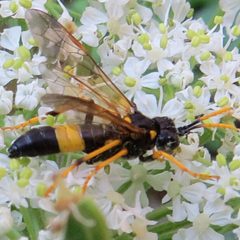
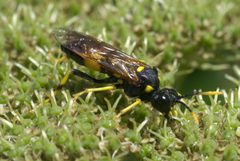
can be distinguished from other Hymenoptera by the broad, unconstricted connection between and . Within the Tenthredo, T. maxima is placed in its own group separate from the originalis group. The two (T. m. maxima and T. m. retura) can be differentiated based on morphological characters across 12 distinct . Females possess a saw-like ovipositor for inserting into plant tissue, but lack a stinger. Larvae have seven pairs of , distinguishing them from caterpillars which have five or fewer pairs.
Images
Habitat
Montane meadows or semi-open forest in the montane zone. Associated with deciduous forest edges and aspen stands in mountainous regions.
Distribution
Western North America: Rocky Mountains, Cascade Range, and Sierra Nevada. Specific distribution records include Alberta, British Columbia, and Yukon in Canada.
Seasonality
tend to appear in late summer and early autumn, later in the season than many other Tenthredo which are more abundant in spring.
Similar Taxa
- Other Tenthredo speciesMany Tenthredo occur in the same geographic range and share similar flower-visiting . T. maxima is distinguished by its unique species group placement and later seasonal activity.
- Vespid wasps (Vespidae)T. maxima and other are frequently mistaken for due to similar coloration patterns that mimic stinging . Distinguished by the broad - connection and lack of a stinger in females.
- Lepidoptera caterpillars larvae are often mistaken for caterpillars due to similar foliar feeding . Distinguished by having seven pairs of versus five or fewer in caterpillars.
More Details
Subspecies
Two recognized: T. m. maxima and T. m. retura (formerly described as T. retura Ross, now synonymized). The subspecies show geographic structuring across 12 distinct based on analysis of 24 morphological characters from 2405 specimens.
Phylogenetic position
Forms its own group within Tenthredo with no close relatives in North America; originally included in the originalis group but now recognized as distinct.
Zoogeographic history
Pleistocene glacial cycles have influenced the current distribution and structure across the mountain ranges of western North America.
Sources and further reading
- BugGuide
- GBIF taxonomy match
- iNaturalist taxon
- NCBI Taxonomy
- Soybean Gall Midge: Discovery of a Delicate and Destructive New Species
- Bug Eric: January 2011
- From Curiosity to Control: A New Wasp Joins the Fight Against Soybean Gall Midge
- From curiosity to control: A new wasp joins the fight against soybean gall midge | Blog
- An Old Trick for a New Pest: Well-Timed Hilling Stymies Soybean Gall Midge
- New species of parasitic wasp associated with soybean pest
- TAXONOMY, VARIATION, AND ZOOGEOGRAPHY OF TENTHREDO MAXIMA (NORTON) (HYMENOPTERA: TENTHREDINIDAE)