
Macrophya nigra
(Norton 1860)
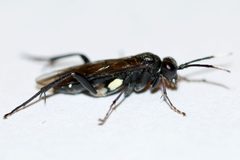
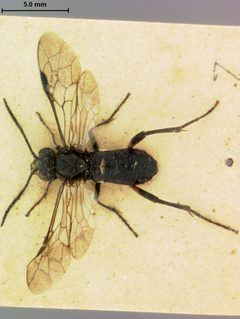
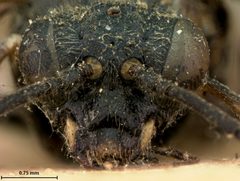
Macrophya nigra is a in the Tenthredinidae whose larvae are specialized herbivores of turtlehead plants (Chelone spp.). Larval activity peaks in midsummer, with feeding damage capable of reducing plant reproductive output. The has been documented in Canada and is known to interact competitively with other herbivores sharing the same host plants.
Pronunciation
How to pronounce Macrophya nigra: /məˈkroʊfiə ˈnɪɡrə/
These audio files are automatically generated. While they are not always 100% accurate, they are a good starting point.
Images
Habitat
Areas supporting turtlehead (Chelone spp.) plants; specific microhabitat requirements not documented.
Distribution
Canada: New Brunswick, Nova Scotia, Ontario, Prince Edward Island. Distribution likely broader but not fully documented in available sources.
Seasonality
Larvae active in midsummer; timing of activity not specified in sources.
Diet
Herbivorous; feeds on turtlehead (Chelone spp.), including Chelone glabra and Chelone obliqua.
Host Associations
- Chelone glabra - larval plant
- Chelone obliqua - larval plant
Life Cycle
Larval stage occurs in midsummer; complete details not available from sources.
Behavior
Larvae defoliate plants, sometimes extensively. Feeding activity can indirectly affect other herbivores by reducing host plant availability.
Ecological Role
Herbivore that reduces reproductive output of turtlehead plants. Competitive interactions with checkerspot caterpillars (Euphydryas phaeton) occur when shared host plants become limited due to prior defoliation.
Similar Taxa
- Tenthredo grandisShares turtlehead (Chelone spp.) plants and similar larval feeding ; co-occurs in same and may have similar .
More Details
Competitive interactions
Defoliation by M. nigra larvae can force prediapause checkerspot caterpillars (Euphydryas phaeton) to abandon plants and search for alternative food sources, demonstrating indirect -level effects of herbivory.
Sources and further reading
- BugGuide
- GBIF taxonomy match
- iNaturalist taxon
- NCBI Taxonomy
- Sanctuary for the Betulaceae | Beetles In The Bush
- Host, Larva, and Life History Notes for Macrophya nigra (Norton) (Hymenoptera: Tenthredinidae)
- Effect of defoliation by checkerspot caterpillars (Euphydryas phaeton) and sawfly larvae (Macrophya nigra and Tenthredo grandis) on their host plants (Chelone spp.)