
Dolerus versus
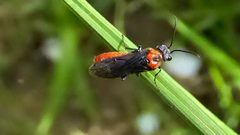
Dolerus versus is a of in the Tenthredinidae. The Dolerus comprises medium to large sawflies commonly associated with grasses and sedges. Like other members of the Dolerinae, are typically active in spring and early summer. The larvae feed on monocotyledonous plants and can be distinguished from lepidopteran caterpillars by having six or more pairs of rather than five or fewer.
Pronunciation
How to pronounce Dolerus versus: //doˈleː.rus ˈwer.sus//
These audio files are automatically generated. While they are not always 100% accurate, they are a good starting point.
Identification
can be identified to by the combination of: broad - junction (no petiole), short with fewer than 30 flagellomeres, and forewing with anal present. Within Dolerus, -level identification requires examination of genitalia and often relies on subtle differences in coloration, punctation, and structural features. Distinguished from similar genera (such as Dolerus haematodes) by specific genitalic and fine details of and thoracic . Larvae distinguished from lepidopteran caterpillars by six or more pairs of ; distinguished from other sawfly larvae by plant association and subtle morphological features.
Images
Habitat
Associated with grassland and wetland where plants of the Cyperaceae or Poaceae occur. found in open, sunny areas with abundant herbaceous vegetation.
Distribution
Specific distribution records are sparse; the has been documented from limited localities based on few observations. The Dolerus has a Holarctic distribution, with species occurring across North America and Eurasia.
Seasonality
active in spring and early summer, typical for the . Larval stage occurs during the growing season of plants.
Diet
Larvae feed on monocotyledonous plants, particularly sedges (Cyperaceae) and grasses (Poaceae). Specific plant records for this are not documented.
Life Cycle
Complete with four stages: , larva, pupa, and . Larvae feed externally on plant foliage. occurs in soil or concealed locations. or partially , with timing synchronized to host plant .
Behavior
are and found on flowers or vegetation. Larvae are external feeders on leaves. No specialized social or defensive displays documented.
Ecological Role
Larvae function as primary consumers in grassland and wetland . may contribute to pollination while feeding on nectar. Serve as prey for various including birds, spiders, and .
Human Relevance
Not known to be of significant economic importance. Occasionally may be noticed by naturalists and entomologists in grassland . Not a documented pest of crops or ornamental plants.
Similar Taxa
- Dolerus haematodesSimilar size, coloration, and preferences; distinguished by specific genitalic characters and details of
- Other TenthredinidaeBroad waist distinguishes from in ; short and forewing venation distinguish from other
- Lepidoptera larvaeLarvae superficially similar but have six or more pairs versus five or fewer in caterpillars
More Details
Taxonomic Note
Dolerus is a large and taxonomically challenging with many similar . Reliable identification often requires examination of male genitalia and reference to regional taxonomic revisions.
Observation Rarity
Only two observations documented in iNaturalist as of source date, indicating either genuine rarity, restricted distribution, or under-recording due to identification difficulty.
Sources and further reading
- BugGuide
- iNaturalist taxon
- Bug Eric: Predator and Prey: Ants versus Termites
- Bug Eric: Predator and Prey: Ants versus "Lions" and "Tigers"
- Pink Bollworm Versus Bt Cotton: Three Countries, Three Results
- Diffusion versus post-processing, or perhaps something even better? | Beetles In The Bush
- Trash Bug Versus Mealybug: Unique Insect Interaction Filmed for First Time
- Catch a Glimpse of Caterpillars During National Moth Week