
Scolioneura vaccinii
Smith & Eiseman, 2015
Scolioneura vaccinii is a of in the Tenthredinidae, described in 2015 from British Columbia, Canada. The species is associated with Vaccinium (blueberry/cranberry) plants, as indicated by its specific epithet. It belongs to a small of blennocampine sawflies whose larvae are leaf miners.
Pronunciation
How to pronounce Scolioneura vaccinii: //skɔˌli.oʊˈnʊə.rə vɑkˈsɪn.i.aɪ//
These audio files are automatically generated. While they are not always 100% accurate, they are a good starting point.
Identification
Distinguished from by genitalia and association with Vaccinium. As a recently described , precise external diagnostic features require examination of the original description (Smith & Eiseman, 2015).
Images
Habitat
Associated with Vaccinium-dominated , likely including bogs, wetlands, and forest understories where blueberries and cranberries occur.
Distribution
Known from British Columbia, Canada. Distribution beyond this type locality has not been documented.
Diet
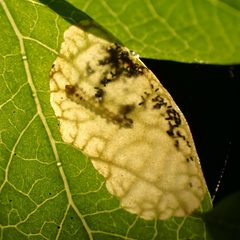
Larval feeding: leaf mining in Vaccinium leaves. feeding habits unknown.
Host Associations
- Vaccinium - larval of blueberries and cranberries; specific not confirmed beyond genus level
Life Cycle
Larval stage is a ; complete details undescribed.
Ecological Role
on Vaccinium; potential minor pest of blueberry and cranberry crops.
Human Relevance
Potential economic significance for Vaccinium (blueberry and cranberry production) due to larval leaf mining damage.
Similar Taxa
- Scolioneura vicinaCongeneric with similar ; distinguished by plant and male genitalia structure
- Profenusa speciesOther Vaccinium-associated ; Scolioneura distinguished by wing venation and larval mining pattern
More Details
Taxonomic history
Described in 2015 by David R. Smith and Charley Eiseman based on specimens reared from Vaccinium leaves in British Columbia. The epithet 'vaccinii' directly references its plant association.
Observation data
iNaturalist records (20 observations as of source date) suggest limited but detectable presence; most observations likely from collectors given recent description date.