
Fenusa dohrnii
(Tischbein, 1846)
European alder leafminer
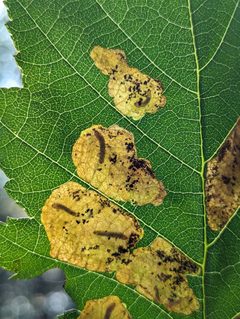
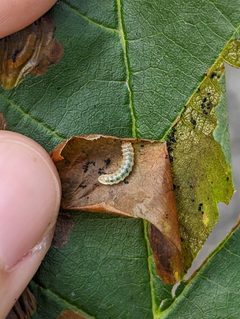
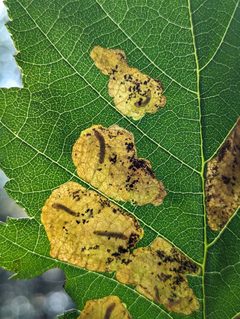
Fenusa dohrnii is a in the Tenthredinidae, commonly known as the European alder leafminer. The species is native to Europe and has been introduced to North America, with records from Canada. As a leafminer, its larvae feed internally within leaf tissue, creating distinctive mines on alder leaves.
Pronunciation
How to pronounce Fenusa dohrnii: //fɛˈnuːsə ˈdɔːʁni.aɪ//
These audio files are automatically generated. While they are not always 100% accurate, they are a good starting point.
Identification
Larvae create blotch mines on alder leaves, with (excrement) deposited in discrete pellets. are small with typical tenthredinid ; precise external diagnostic features require examination. Mines may be distinguished from those of other alder-feeding leafminers by specificity and mine characteristics.
Images
Habitat
Associated with alder (Alnus) stands, including riparian woodlands, wetlands, and moist forest edges where trees occur.
Distribution
Native to Europe, with documented presence in Belgium. Introduced to North America; recorded in Canada.
Diet
Larvae feed as leafminers within leaves of alder (Alnus spp.).
Host Associations
- Alnus - larval food plant
Behavior
Larvae are endophagous leafminers, feeding between leaf layers. are free-living and likely short-lived, with mating and oviposition occurring on foliage.
Ecological Role
As a leafminer, larvae contribute to herbivory pressure on alder . are known to attack related Fenusa , suggesting similar trophic relationships may occur.
Human Relevance
Minor economic significance; may cause aesthetic damage to ornamental alders. Occasionally noted in contexts for alders.
Similar Taxa
- Fenusa pusillaAnother European alder leafminer; distinguished by mine and possibly preferences, though precise separation requires expert identification
- Profenusa thomsoniAlso a birch and alder leafminer; differs in range and geographic distribution
More Details
Nomenclatural history
Originally described as Caliosysphinga dohrni by Tischbein in 1846, later transferred to Fenusa.
Invasion biology
Introduction to North America likely occurred through human transport of plant material; Canadian records indicate established outside native range.