
Tomostethus multicinctus
(Rohwer, 1909)
brownheaded ash sawfly
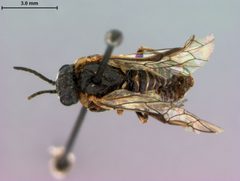
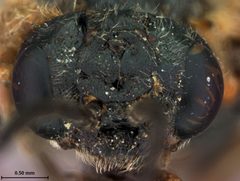
Tomostethus multicinctus, commonly known as the brownheaded ash , is a sawfly in the Tenthredinidae native to southern Canada and the eastern United States. are -like in appearance but do not sting. The larvae are specialized herbivores that feed gregariously on ash foliage, with a tightly synchronized with the leaf of their trees. Heavy can cause complete defoliation within a week, though trees typically recover by producing new foliage.
Pronunciation
How to pronounce Tomostethus multicinctus: /təˈmɒstəθəs ˌmʌltɪˈsɪŋktəs/
These audio files are automatically generated. While they are not always 100% accurate, they are a good starting point.
Identification
Distinguished from other ash-feeding by the combination of: brown capsule in larvae (contrasting with pale body); gregarious feeding ; and specific timing of coinciding with ash leaf unfurling. Adults may be confused with but lack the constricted waist and possess the characteristic saw-like ovipositor of sawflies.
Images
Habitat
Associated with ash trees in forested, urban, and suburban environments. Larvae develop on ash foliage; are found near trees during the brief spring period. occurs in the soil beneath host trees.
Distribution
Native to southern Canada (Ontario) and the eastern United States. Distribution records include Ontario, Canada and adjacent regions of the United States.
Seasonality
emerge in spring when ash leaves begin to unfurl, typically late spring. Larvae feed during late spring to early summer. One per year. overwinter in soil cocoons, pupating in early spring.
Diet
Larvae feed exclusively on ash (Fraxinus) foliage, including green ash (Fraxinus pennsylvanica), white ash (Fraxinus americana), and European ash (Fraxinus excelsior). Larvae initially feed on the central portion of leaflets creating pinpoint holes, then consume all leaf tissue except as they grow.
Host Associations
- Fraxinus - primary -level association
- Fraxinus americana - primary White ash
- Fraxinus pennsylvanica - primary Green ash
- Fraxinus excelsior - primary European ash
Life Cycle
(one per year). are laid in slits in emerging leaflets in late spring. Larvae feed gregariously through late spring to early summer, passing through several instars. Final instar larvae spin cocoons in topsoil and overwinter as . occurs in early spring, with emerging to coincide with ash leaf .
Behavior
Larvae feed gregariously, with groups consuming leaf tissue rapidly. When disturbed by high winds, larvae may detach from leaves. Final instar larvae shed their , which remains attached to leaves while the larva drops to the ground to form a cocoon. are and do not sting.
Ecological Role
herbivore and defoliator of ash trees. Heavy can cause complete defoliation within a week, though trees typically recover through production of new foliage. Serves as prey for and various bird including red-eyed vireo, rose-breasted grosbeak, English sparrow, and catbirds.
Human Relevance
Considered a pest of ornamental and native ash trees. Management includes physical removal with soapy water or hose spraying, and application of garden . Control efforts must target early stages to be effective. Not a stinging despite -like appearance.
Similar Taxa
- Other Tenthredinidae sawflies on ashMay share plants and general appearance; distinguished by larval coloration, timing of , and specific feeding patterns
More Details
Population Dynamics
High winds can detach larvae from foliage, potentially serving as a natural control mechanism. Despite the capacity for rapid defoliation, the single limits long-term tree damage.
Research Significance
One of the better-studied North American due to its economic impact on ash trees; early 20th century studies established basic and seasonal .
Sources and further reading
- BugGuide
- Wikipedia
- GBIF taxonomy match
- iNaturalist taxon
- NCBI Taxonomy
- snakes | Blog - Part 2
- herpetology | Blog - Part 3
- Pensoft blog - Part 62
- Zookeys | Blog - Part 16
- ZooKeys | Blog
- New deadly snake from Asia named after character from Chinese myth ‘Legend of White Snake’ | Blog
- Biology of Tomostethus Multicinctus (Roh.), a Sawfly Attacking Ash