
Megischus arizonicus
Townes
Arizona Crown Wasp
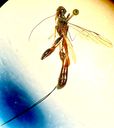
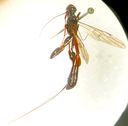
Megischus arizonicus is a of crown wasp in the Stephanidae, first described by Townes. Originally known only from Arizona, USA, the species has since been documented in central Mexico, expanding its known range significantly. Like other stephanids, it is a associated with wood-boring larvae. The species exhibits the characteristic elongated, crown-like structure on the that gives the family its . Records remain sparse, with only a handful of observations documented in biodiversity databases.
Pronunciation
How to pronounce Megischus arizonicus: //mɛˈɡɪskəs ˌærɪˈzoʊnɪkəs//
These audio files are automatically generated. While they are not always 100% accurate, they are a good starting point.
Identification
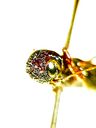
Members of Stephanidae are distinguished from other Hymenoptera by the prominent elevated structure on the vertex of the , forming a crown-like or coronet-like projection with teeth or . Megischus arizonicus can be separated from by geographic distribution and subtle morphological differences in head structure and wing venation, though detailed comparative descriptions are limited in available literature. The body is typically elongated with long, multi-segmented and a slender petiole ( waist).
Images
Habitat
Associated with forested and woodland where wood-boring beetles occur. The type locality in Arizona and subsequent Mexican records suggest preference for montane or canyon environments in the southwestern United States and central Mexico. Specific microhabitat requirements relate to the presence of suitable larvae in dead or dying wood.
Distribution
Originally described from Arizona, United States. Subsequently recorded from central Mexico (first Mexican records published in 2003). Distribution records remain limited; GBIF shows sparse occurrence data. The appears to have a disjunct or poorly sampled distribution across the southwestern United States and Mexico.
Host Associations
- Wood-boring beetles - Stephanidae are of larvae of wood-boring beetles, particularly Buprestidae and Cerambycidae, though specific records for M. arizonicus are not documented
Behavior
are likely active during daylight hours and may be found on dead wood or vegetation near . Like other stephanids, females presumably use their long ovipositors to drill into wood and deposit on or near host larvae. Adults may be attracted to recently dead or stressed trees where host beetles are active.
Ecological Role
As a of wood-boring beetles, contributes to natural regulation of in forest . May be particularly important in post-disturbance where wood-boring beetles proliferate.
Similar Taxa
- Other Megischus speciesShare the characteristic crown-like structure; identification to level requires examination of head arrangement, wing venation details, and geographic provenance
- Other Stephanidae genera (Schlettererius, Foenatopus)Similar body plan and ; distinguished by structure , segmentation, and wing venation patterns
More Details
Taxonomic history
The was described by Townes, a prominent hymenopterist who contributed extensively to the of Ichneumonidae and related . The Megischus was revised by Aguiar & Johnson (2003), who provided updated distribution records including the first Mexican documentation of M. arizonicus.
Collection challenges
Stephanidae are rarely collected in large numbers due to their specialized and association with concealed . , sweeping near dead wood, and direct examination of wood-boring galleries may increase detection probability.