
Vanhornia eucnemidarum
Crawford, 1909
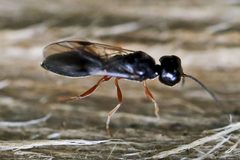
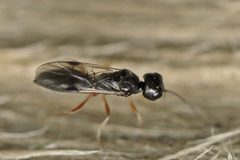
Vanhornia eucnemidarum is a of parasitic wasp in the Vanhorniidae, first described by Crawford in 1909. It is one of the few known species in this small family of Hymenoptera. The species is associated with eucnemid beetles, as indicated by its specific epithet. Very few observations exist in public databases, reflecting its rarity or cryptic nature.
Pronunciation
How to pronounce Vanhornia eucnemidarum: /vænˈhɔːr.niə juːkˌniː.mɪˈdɑː.rəm/
These audio files are automatically generated. While they are not always 100% accurate, they are a good starting point.
Identification
Vanhornia eucnemidarum can be distinguished from other Hymenoptera by its placement in the Vanhorniidae, a small group of proctotrupoid . Members of this family are generally small, slender wasps with reduced wing venation. Separation from other Vanhornia and related families such as Pelecinidae and Proctotrupidae requires examination of detailed morphological characters including structure, wing venation patterns, and abdominal petiole form.
Images
Distribution
Records of Vanhornia eucnemidarum are sparse. The has been documented in North America based on historical collection records. Specific locality data are limited due to few modern observations.
Host Associations
- Eucnemidae - The specific epithet 'eucnemidarum' indicates association with eucnemid beetles, presumably as a of larvae or pupae.
Ecological Role
As a member of Vanhorniidae, Vanhornia eucnemidarum likely functions as a of larvae, contributing to of its . The is considered part of the parasitoid complex in forest and woodland .
Similar Taxa
- VanhorniaOther within the Vanhornia share the general body plan and -level characteristics; species-level separation requires detailed morphological examination.
- Pelecinus polyturatorThis large, distinctive pelecinid wasp is sometimes confused with vanhorniids due to shared placement in the superfamily Proctotrupoidea, but differs dramatically in size and the extremely elongated female .
- ProctotrupidaeMembers of this related share the proctotrupoid body form and reduced wing venation; family distinction relies on characters of the mesosternum and wing venation details.
More Details
Taxonomic history
Vanhorniidae was long considered a relict with few extant . Vanhornia eucnemidarum was among the earliest described species in the , with the authority Crawford, 1909. The family has gained increased attention from hymenopterists due to its phylogenetic position among early-diverging lineages of Proctotrupoidea.
Rarity in collections
With only 14 observations in iNaturalist and limited GBIF records, Vanhornia eucnemidarum appears genuinely rare or undercollected. This may reflect specialized associations, specific requirements, or seasonal activity patterns that limit encounter rates.