
Vanhornia
Crawford, 1909
Species Guides
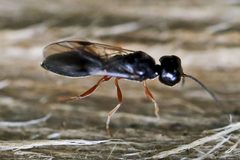
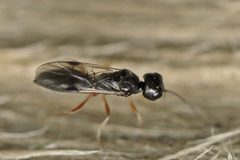
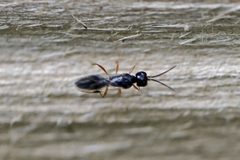
1Vanhornia is a of small comprising four described . It is the sole genus in the Vanhorniidae, a group formerly placed in Proctotrupoidea but now classified in Diaprioidea. Species are known from North America, the Palearctic, East Asia, and Southeast Asia. All members are parasitoids of larvae in the family Eucnemidae.
Pronunciation
How to pronounce Vanhornia: /vænˈhɔːrniə/
These audio files are automatically generated. While they are not always 100% accurate, they are a good starting point.
Identification
Vanhornia are minute distinguished from other proctotrupoid by characteristics of the family Vanhorniidae, including reduced wing venation and specific antennal segmentation. The may be separated from other vanhorniid genera (if any existed) by its family status. Species-level identification requires examination of morphological details such as body proportions and genitalia; V. eucnemidarum (North America), V. leileri (Palearctic), V. quizhouensis (South China, Thailand), and V. yurii (Northeast Asia) are distinguished by geographic range and subtle structural differences.
Images
Habitat
Forested environments where Eucnemidae occur. V. leileri has been collected in mixed oak-hornbeam forest. The apparent rarity of these is linked to the scarcity of their saproxylic beetle hosts in decaying wood.
Distribution
V. eucnemidarum: widespread across North America. V. leileri: widespread across the Palearctic (Sweden, Russia, Germany, Netherlands, Switzerland, France). V. quizhouensis: South China and Thailand. V. yurii: Northeast Asia.
Seasonality
active in spring; V. leileri collected in May in France.
Host Associations
- Eucnemidae - Larvae of false click beetles; specific unknown
Life Cycle
Development occurs within larvae in decaying wood. Details of deposition, larval stages, and are undocumented.
Behavior
have been collected using , suggesting aerial activity in forest or understory. Presumably searches for larvae in wood via or ovipositor probing.
Ecological Role
regulating of saproxylic Eucnemidae beetles in forest . Contributes to nutrient cycling through wood decomposition .
Human Relevance
No direct economic importance. Of interest to hymenopteran systematists due to its unique phylogenetic position as the sole of Vanhorniidae. May serve as an indicator of intact saproxylic and old-growth forest conditions.
Similar Taxa
- ProctotrupidaeFormerly classified together in Proctotrupoidea; distinguished by -level characters of wing venation and antennal structure
- HeloridaeAnother small in Diaprioidea; differs in associations (Neuroptera) and morphological details
More Details
Taxonomic placement
Vanhorniidae was historically placed in Proctotrupoidea but is now recognized as part of Diaprioidea based on molecular and morphological evidence
Rarity
The scarcity of Vanhornia specimens in collections likely reflects genuine rarity linked to specificity and requirements rather than collection alone