
Eusapyga verticalis
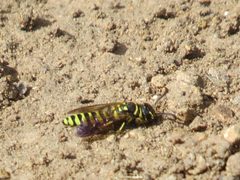
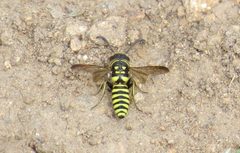
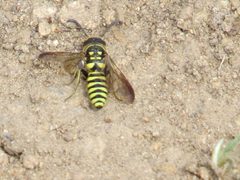
Eusapyga verticalis is a of sapygid in the Sapygidae. Sapygid wasps are cleptoparasitic, meaning females lay in the nests of other solitary bees and wasps, where their larvae consume the 's provisions. The species is part of a small family of wasps that are relatively poorly studied compared to their better-known relatives in the families Mutillidae and Scoliidae.
Pronunciation
How to pronounce Eusapyga verticalis: //juːˈsæpɪɡə vɜrˈtɪkəlɪs//
These audio files are automatically generated. While they are not always 100% accurate, they are a good starting point.
Identification
Eusapyga verticalis can be distinguished from other sapygid by the combination of its -level characteristics and the specific epithet 'verticalis,' which likely refers to some aspect of its vertical markings or body orientation. Sapygid wasps generally have a compact, wasp-like body with reduced wing venation and often exhibit black and white or black and yellow color patterns. Definitive identification requires examination of morphological details not available in the provided sources.
Images
Distribution
The has been documented in North America, with iNaturalist observations placing it in the southwestern United States. The Eusapyga has a distribution centered in western North America.
Behavior
As a , females of Eusapyga verticalis likely search out the nests of solitary bees or , enter unguarded nests, and deposit . The resulting larvae consume the pollen, nectar, or paralyzed prey provisions intended for the 's offspring. This eliminates the need for females to forage for their own young.
Ecological Role
As a , Eusapyga verticalis functions as a regulator of solitary bees and . By parasitizing nests, it reduces host reproductive success and may influence host nesting and distribution. Sapygids contribute to the complex web of interactions in and wasp , though their overall ecological impact is likely limited by their relatively low abundance compared to hosts.
Similar Taxa
- Mutillidae (velvet ants)Velvet ants are also cleptoparasitic with similar body plans and coloration, but they are exclusively parasitic on other wasps and bees and have wingless females with extremely dense, velvety . Sapygid wasps have winged females and less dense hair.
- Scoliidae (scoliid wasps)Scoliid wasps share the -level placement in the superfamily Scolioidea and have robust, -like bodies, but they are not cleptoparasitic—females dig into soil to parasitize scarab beetle larvae directly rather than entering pre-existing nests.