
Myrmosula
Bradley, 1917
Species Guides
4Myrmosula is a of small parasitic in the Myrmosidae (sometimes historically placed in Mutillidae). These insects are part of a poorly studied group of velvet ant relatives, with winged males and wingless females. The genus was established by Bradley in 1917 and remains taxonomically challenging due to limited specimen availability and morphological convergence with other myrmosid genera.
Pronunciation
How to pronounce Myrmosula: /mɪrˈmɒs.jʊ.lə/
These audio files are automatically generated. While they are not always 100% accurate, they are a good starting point.
Identification
Distinguished from Mutillidae (true velvet ants) by wingless females lacking the dense, velvety characteristic of that ; from other Myrmosidae by subtle genitalic and antennal characters requiring microscopic examination. Males may be confused with small chrysidoid or other parasitic Hymenoptera. Identification to level requires taxonomic knowledge and comparison with .
Images
Appearance
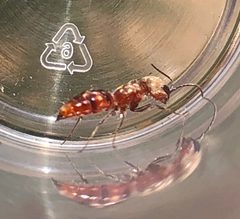
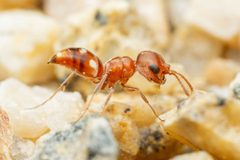
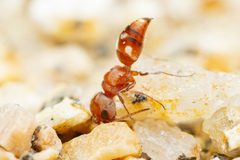
Winged males possess functional wings and relatively unmodified . Wingless females are with a robust, compact body form resembling velvet ants (Mutillidae), often with reduced or absent wings and a heavily sclerotized . Body size is generally small compared to related . is pronounced, with males and females differing substantially in body plan.
Habitat
Arid and semi-arid environments including sandy soils, scrublands, and open woodlands. Associated with ground-nesting bees and . Specific microhabitat preferences are poorly documented due to cryptic habits of females and limited collecting effort.
Distribution
Primarily Nearctic, with records from southwestern United States and Mexico. Distribution likely extends into adjacent regions but remains incompletely mapped due to undercollecting.
Seasonality
activity patterns are poorly documented. Likely active during warm months when nests are accessible, but specific phenological data are lacking.
Life Cycle
Presumed of ground-nesting bees or , with females entering nests to deposit . Larvae develop as ectoparasitoids or endoparasitoids of host immatures. Detailed data are unavailable for any .
Behavior
Females are ground-dwelling and , using their robust bodies to enter soil and access nests. Males are aerial and likely search for females via pheromonal or visual cues. Both sexes are presumably solitary.
Ecological Role
that may regulate of ground-nesting Hymenoptera. Population-level impacts are unknown.
Human Relevance
No documented economic or medical importance. Occasionally collected in pitfall traps or soil sampling for ecological research. Sting of females is presumed present but unverified in literature.
Similar Taxa
- MyrmosaConvergent wingless female and shared Myrmosidae; distinguished by antennal structure and male genitalia
- Mutillidae (velvet ants)Females resemble velvet ants in aptery and robust form; distinguished by reduced , antennal structure, and wing venation in males
- BradynobaenidaeHistorical confusion in -level classification; modern places Myrmosula in Myrmosidae based on molecular and morphological data
More Details
Taxonomic Uncertainty
placement has been disputed, with some classifications merging Myrmosidae into Mutillidae or treating it as a separate family. The Myrmosula has been particularly unstable in phylogenetic analyses due to limited molecular data.
Collection Bias
Winged males are more frequently collected than wingless females, leading to incomplete understanding of ranges and . iNaturalist records (159 observations) suggest growing but still limited documentation.