
Myrmosula rutilans
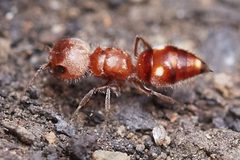
Myrmosula rutilans is a of myrmosid in the Myrmosidae, a small group of wasps. The family Myrmosidae is part of the superfamily Pompiloidea and is closely related to spider wasps (Pompilidae). Species in this family are parasitoids of other insects, though specific records for M. rutilans appear to be limited in the literature. The Myrmosula contains multiple species distributed in North America.
Pronunciation
How to pronounce Myrmosula rutilans: /mɪərˈmoʊsələ ˈruːtɪˌlænz/
These audio files are automatically generated. While they are not always 100% accurate, they are a good starting point.
Identification
Myrmosula rutilans can be distinguished from related by features of the Myrmosula, including wing venation patterns and body proportions typical of myrmosid wasps. Females possess a long, slender ovipositor used to access . The name "rutilans" (meaning reddish or glowing) may refer to coloration, though specific diagnostic color patterns require verification from specimens. Separation from other Myrmosula species requires examination of detailed morphological characters including , wing venation, and genitalia.
Images
Distribution
Recorded from North America, with observations from the United States. Specific state or regional records require verification from specimen data.
Ecological Role
As a member of the Myrmosidae, this likely functions as a agent of its . Myrmosid wasps are generally considered rare components of their due to low population densities.
Human Relevance
No direct economic or medical significance is documented. The Myrmosidae is of interest primarily to hymenopteran systematists and students of diversity.
Similar Taxa
- Myrmosa spp.Convergent body plan in related Myrmosidae; distinguished by wing venation details and antennal structure
- Pompilidae (spider wasps)Similar elongated body form and lifestyle; distinguished by wing venation, presence of tarsal comb in females, and associations