
Odontophotopsis melicausa
(Blake, 1871)
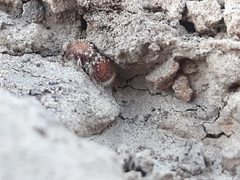
A of velvet ant in the Odontophotopsis, first described by Blake in 1871. The genus is characterized by distinctive dental modifications on the . Like other mutillids, this species exhibits with wingless females and winged males.
Pronunciation
How to pronounce Odontophotopsis melicausa: /oʊˌdɒntoʊfoʊˈtɒpsɪs mɛlɪˈkɔːzə/
These audio files are automatically generated. While they are not always 100% accurate, they are a good starting point.
Identification
Belongs to Odontophotopsis, a distinguished from other mutillid genera by the presence of teeth or dentiform processes on the . Specific diagnostic features for O. melicausa relative to are not documented in available sources.
Images
Distribution
North America; specific range details beyond continental occurrence are not documented in available sources.
Life Cycle
Complete with , larva, pupa, and stages typical of Hymenoptera. As with other mutillids, larvae are ectoparasitoids of other insects, though specific for this are not documented.
Behavior
Females are wingless and ground-dwelling; males are winged. As with other velvet ants, females possess a powerful sting and exhibit defensive when disturbed.
Ecological Role
Presumed as larvae, contributing to of insects.
Similar Taxa
- Odontophotopsis hammetti in the same , sharing the diagnostic mandibular characteristic of Odontophotopsis; distinguished by -specific morphological differences not detailed in available sources.
- Other Mutillidae generaLack the distinctive toothed that define Odontophotopsis.