
Odontophotopsis
Viereck, 1903
Species Guides
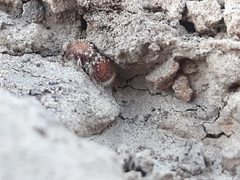
9Odontophotopsis is a of velvet ants (Mutillidae) established by Viereck in 1903. in this genus are of other Hymenoptera, with documented associations including crabronid . The genus includes the O. unicornis species-group, which diversified during the Pleistocene approximately 1 million years ago. Females are wingless and wasp-like in appearance, while males possess wings.

Pronunciation
How to pronounce Odontophotopsis: //oʊˌdɒn.toʊˈfoʊ.toʊˌsɪs//
These audio files are automatically generated. While they are not always 100% accurate, they are a good starting point.
Identification
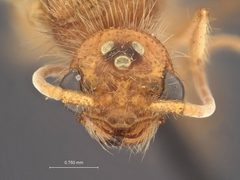
Members of Odontophotopsis can be distinguished from other mutillid by characteristics of the mandibular , as suggested by the genus name (from Greek odont- "tooth" and Photopsis, a related genus). Females lack wings and have a compact, -like body form typical of female mutillids. Males possess wings and exhibit more slender body proportions. -level identification requires examination of genitalic structures and other detailed morphological features.
Images
Habitat
Arid and desert-adapted environments in North America. Associated with open, dry where nesting occurs.
Distribution
North America, with records from California and other western states. distributions span arid regions of the continent.
Host Associations
- Oxybelus uniglumis - Specimens of O. succinea eclosed from cocoons of this crabronid in Davis, California
Life Cycle
Larval development occurs within cocoons. The larval stage has been described for O. succinea based on exuvium. and from host cocoons has been documented.
Behavior
targeting nesting Hymenoptera. Females are ground-active and search for nests. Males are winged and likely engage in mate-searching .
Ecological Role
of other , particularly Crabronidae. Acts as a regulator of in arid .
Similar Taxa
- PhotopsisClosely related from which Odontophotopsis was distinguished; Odontophotopsis differs in mandibular
- DasymutillaAnother large mutillid with wingless females; Odontophotopsis generally differ in body proportions and mandibular structure
- SphaeropthalmaSympatric mutillid with similar female ; distinguished by genitalic and other detailed structural features
More Details
Pleistocene Diversification
The O. unicornis -group (including O. unicornis and O. erebus) represents a rare example of Pleistocene-age species-level divergence in desert-adapted North American , estimated at approximately 1 million years ago. This contrasts with the more common pattern of late Neogene diversification in arid-adapted biota.
Taxonomic History
O. annulata Baker was synonymized with O. succinea Viereck based on examination. The female of O. unicornis was first associated with its male using molecular data, representing an important advance in mutillid where sexes are often described separately.
Sources and further reading
- BugGuide
- GBIF taxonomy match
- iNaturalist taxon
- NCBI Taxonomy
- odontophotopsis_hammetti_pitts_holotype_ucrc_ent_90731_lateral.jpg | Entomology Research Museum
- Primary Type List | Entomology Research Museum
- Pleistocene Diversification of theOdontophotopsis unicornisSpecies-Group (Hymenoptera: Mutillidae)
- Description of the female and larval stage of Odontophotopsis succinea Viereck (Hymenoptera: Mutillidae), with new synonymy and notes