
Dasymutilla satanas
Mickel, 1928
Satan's velvet ant
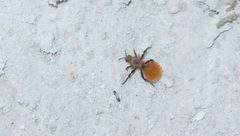
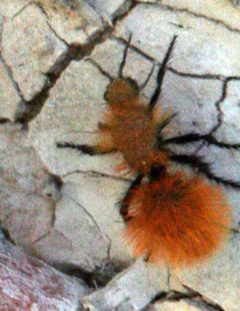
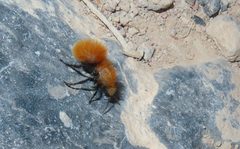
Dasymutilla satanas, commonly called Satan's , is a of wingless female in the Mutillidae found in the arid deserts of the Great Basin region of North America. The species name references the harsh desert environment it inhabits. Females are notably large for the , comparable in size to Dasymutilla magna and Dasymutilla sackenii. Like other velvet ants, females possess a powerful sting and are solitary of ground-nesting insects.
Pronunciation
How to pronounce Dasymutilla satanas: /ˌdæsɪˈmjuːtɪlə səˈteɪnæs/
These audio files are automatically generated. While they are not always 100% accurate, they are a good starting point.
Identification
Females are relatively large-bodied for Dasymutilla, with body size comparable to D. magna and D. sackenii. Specific coloration and pattern details are not documented in available sources. As with all mutillids, females are wingless while males possess wings. Positive identification requires expert examination.
Images
Habitat
Arid desert environments of the Great Basin region. The is specifically associated with harsh, dry desert conditions.
Distribution
Great Basin region of North America, including deserts of the western United States. Distribution records indicate presence in Arizona, California, and Nevada in the USA, and Baja California in Mexico.
Seasonality
Females have been collected in mid to late summer: September–October 2008 and early July 2009. No males have been collected in sampling efforts to date.
Life Cycle
As with other mutillids, females are expected to be external of ground-nesting , bees, or other insects, but specific records for D. satanas have not been documented. Larvae likely develop as parasitoids within host nest .
Human Relevance
Like other large mutillids, females possess a potent sting capable of delivering significant pain. The poses no agricultural or medical significance beyond the defensive hazard to humans who handle specimens.
Similar Taxa
- Dasymutilla magnaFemales are comparable in body size to D. satanas females
- Dasymutilla sackeniiFemales are comparable in body size to D. satanas females
More Details
Etymology
The epithet 'satanas' is most likely a reference to the 'hellish' desert environments where the species occurs, rather than any particular behavioral characteristic.
Sexual dimorphism
As with all mutillids, males are winged and females are wingless. No males of this have been collected in documented sampling efforts, suggesting either extreme rarity, different activity periods, or different preferences compared to females.
Sources and further reading
- BugGuide
- Wikipedia
- GBIF taxonomy match
- iNaturalist taxon
- NCBI Taxonomy
- Bug Eric: Wasp Wednesday: Dasymutilla bioculata
- The gloriously dichromatic Dasymutilla gloriosa | Beetles In The Bush
- A sting to kill a cow? Red velvet ant, a.k.a. cow killer, Dasymutilla occidentalis — Bug of the Week
- Just discovered, two new tarantulasface imminent threats
- Mutillidae | Beetles In The Bush