Dasymutilla sackenii
(Cresson, 1865)
Sacken's Velvet Ant
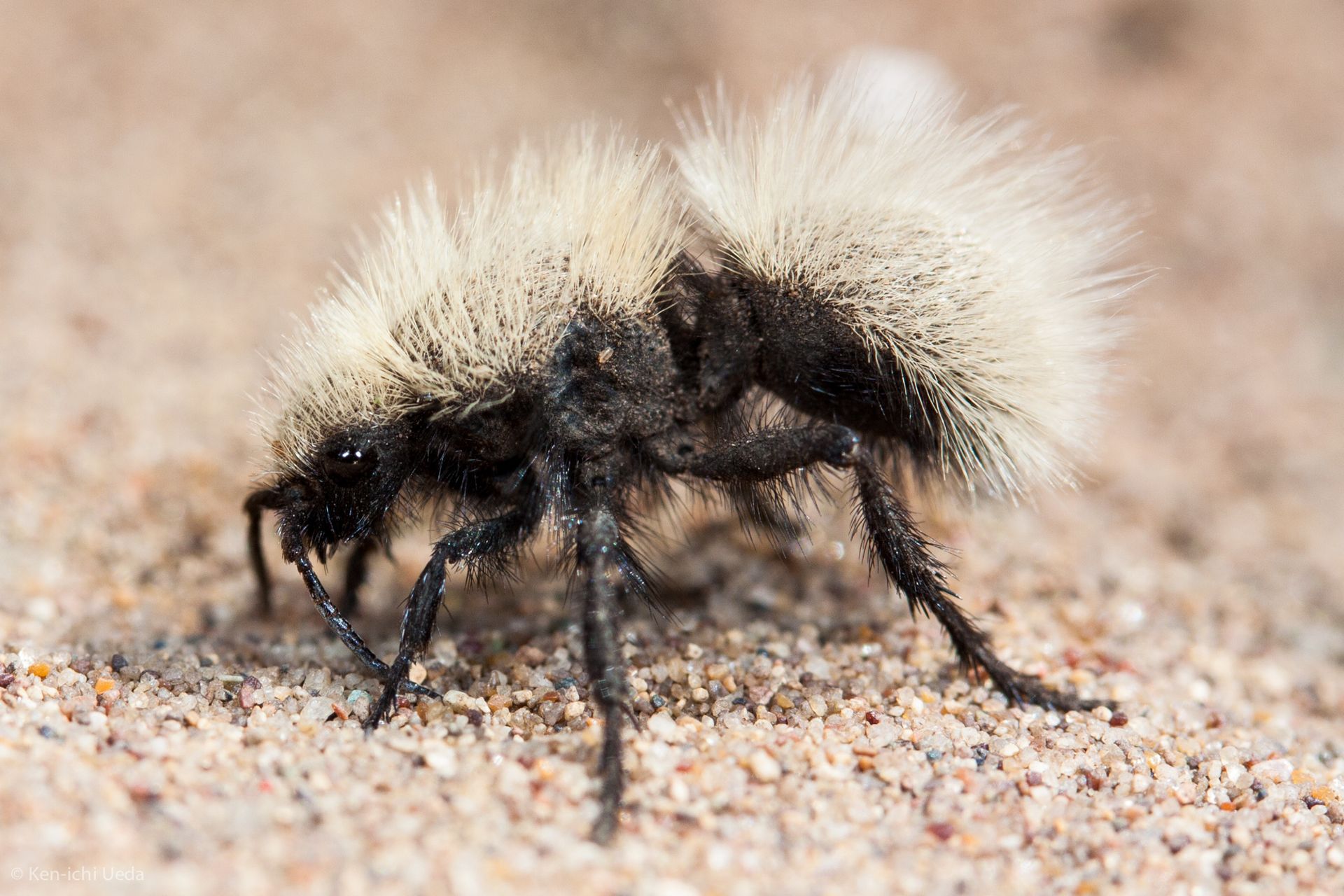
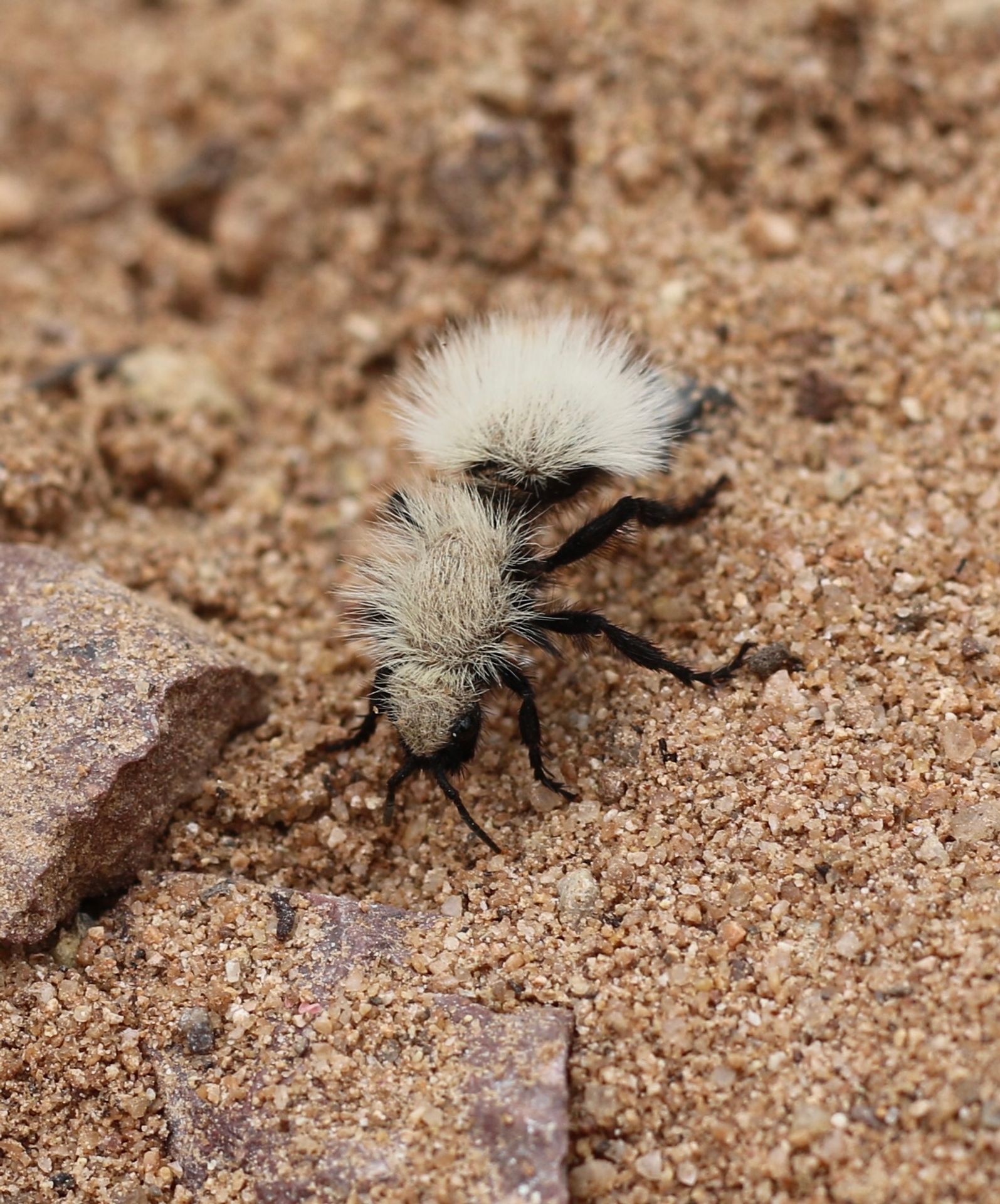
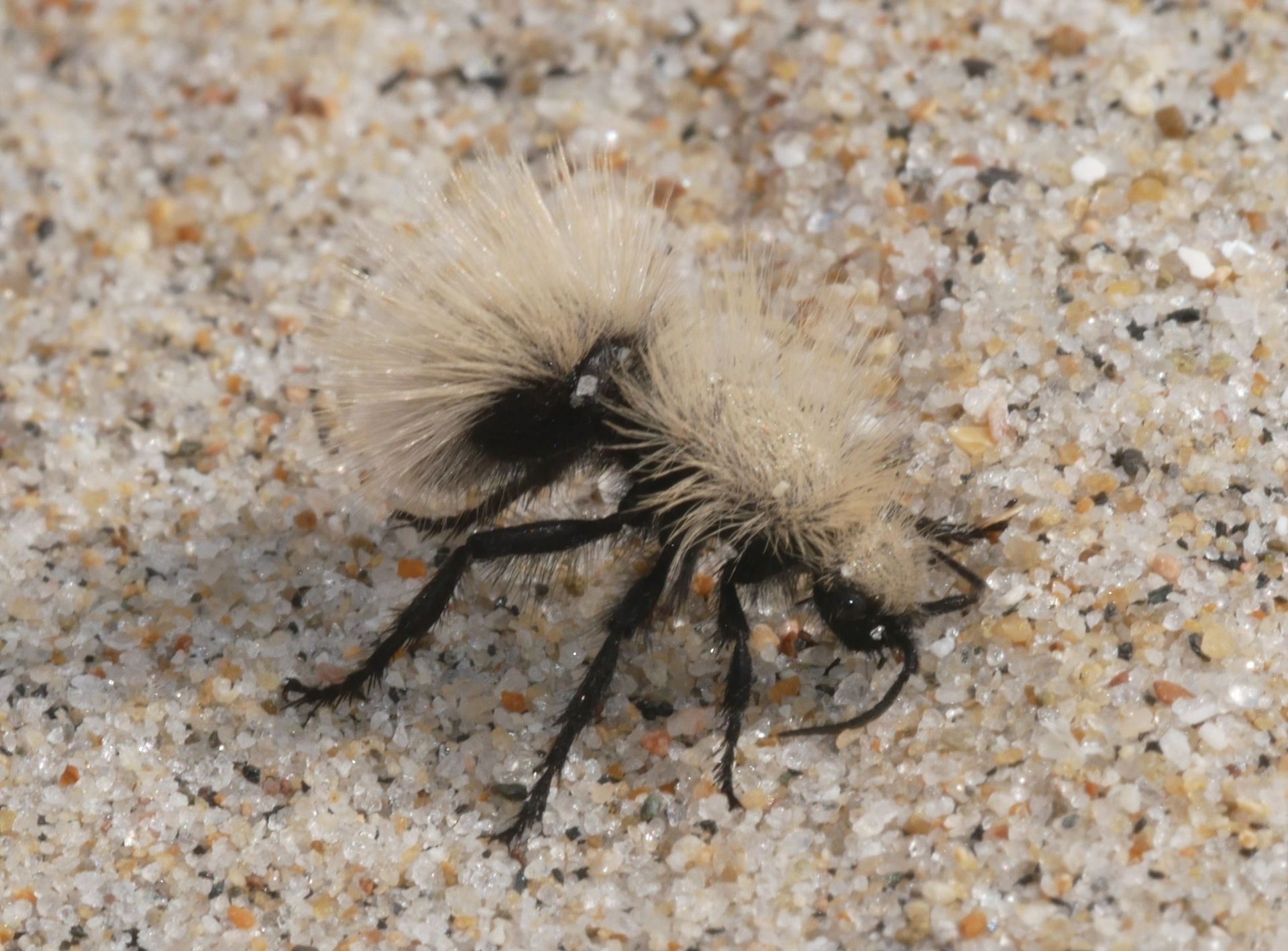
Dasymutilla sackenii is a of velvet ant ( Mutillidae), which are actually solitary rather than true ants. The species exhibits pronounced : males are winged and capable of , while females are wingless and run rapidly across the ground. Females are distinguished by their cream-colored setae contrasting with black setae and legs. The species is named in honor of 19th-century German diplomat and entomologist Carl Robert Osten-Sacken.
Pronunciation
How to pronounce Dasymutilla sackenii: /ˌdæsɪmjʊˈtɪlə ˈsækəniaɪ/
These audio files are automatically generated. While they are not always 100% accurate, they are a good starting point.
Identification
Females can be distinguished from similar Dasymutilla albiceris by the specific pattern of cream and black setae. Superficially resembles D. albiceris, with which it shares a similar geographic distribution. The combination of wingless females with cream-colored dorsal fuzz and black ventral fuzz is diagnostic for this species within its range.
Images
Appearance
Females have dense cream-colored to pale yellow fuzz (setae) covering the surface of the body, with black fuzz on the side and legs. Males possess two pairs of wings and are capable of . Body covered in velvety hair characteristic of the Mutillidae.
Distribution
Found in Oregon, California, Nevada, Baja California, and Baja California Sur. Western North American distribution spanning the Pacific Coast and adjacent interior regions, extending south into the Baja California peninsula.
Seasonality
Most commonly observed from May through October. Observations from December through February are very rare, indicating a pronounced seasonal activity pattern with peak abundance in warmer months.
Behavior
Females run rapidly across the ground in search of nests. Both sexes have been observed feeding on sweet, sticky secretions of plants such as Common Sunflower (Helianthus annuus). When disturbed or captured, individuals may produce an audible squeaking sound (stridulation) by rubbing abdominal segments together, serving as an additional defensive warning signal.
Ecological Role
As with other velvet ants, females are likely of ground-nesting bees and , though specific records for this have not been documented. The aposematic coloration serves as warning advertisement of defensive capabilities, contributing to Müllerian mimicry complexes with other velvet ant species.
Human Relevance
Females possess a potent sting and should not be handled. The specific epithet honors Carl Robert Osten-Sacken, a notable 19th-century entomologist who contributed significantly to North American dipterology.
Similar Taxa
- Dasymutilla albicerisSuperficially similar in appearance and shares overlapping geographic distribution in western North America; distinguished by subtle differences in setal coloration and pattern
More Details
Etymology
The sackenii honors Carl Robert Osten-Sacken (1828-1906), a German diplomat and entomologist who made significant contributions to the study of North American Diptera and other insects.
Taxonomic Note
Like all mutillids, this is a ( Mutillidae) and not a true (family Formicidae), despite the 'velvet ant'.
Sources and further reading
- BugGuide
- Wikipedia
- iNaturalist taxon
- NCBI Taxonomy
- Insect FAQs | Entomology Research Museum
- Ebony Grasshopper
- Bug Eric: Wasp Wednesday: Dasymutilla bioculata
- The gloriously dichromatic Dasymutilla gloriosa | Beetles In The Bush
- A sting to kill a cow? Red velvet ant, a.k.a. cow killer, Dasymutilla occidentalis — Bug of the Week
- Mutillidae | Beetles In The Bush