
Acordulecera
Say, 1836
Species Guides
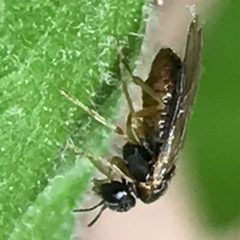
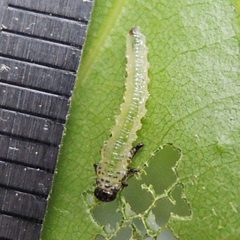
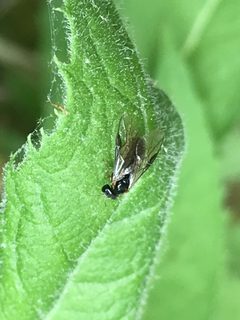
3Acordulecera is a of in the Pergidae, containing more than 20 described . As members of the suborder , these insects lack the narrow waist characteristic of many other hymenopterans. The genus was established by Thomas Say in 1836 and represents a group of herbivorous insects whose larvae feed on plant material.
Pronunciation
How to pronounce Acordulecera: //əˌkɔːr.dʊˈlɛ.kɛ.rə//
These audio files are automatically generated. While they are not always 100% accurate, they are a good starting point.
Identification
Acordulecera can be distinguished from other pergids by genitalia and wing venation patterns, though specific diagnostic features require examination of preserved specimens. The broad connection between and (absence of a petiole or ' waist') separates them from and other narrow-waisted hymenopterans. Species-level identification typically requires examination.
Images
Distribution
of Acordulecera have been documented in North America based on iNaturalist observations and collection records.
Diet
Larvae of Acordulecera feed on plant material; specific plant associations vary by species but are not comprehensively documented for the .
Ecological Role
As herbivores, Acordulecera larvae contribute to nutrient cycling and plant dynamics. may serve as during nectar feeding.
Human Relevance
Some may occasionally reach pest status when larval are high, though Acordulecera is generally not considered economically significant. The is of interest to hymenopteran systematists and biodiversity researchers.
Similar Taxa
- PergaBoth are in Pergidae, but Perga is primarily Australian while Acordulecera is Nearctic; Perga often have distinctive color patterns and larger body size.
- AcantholydaBoth are , but Acantholyda belongs to Pamphiliidae, characterized by different wing venation and often associated with conifers rather than the broad-leaved typical of many Pergidae.
More Details
Taxonomic history
The was described by American entomologist Thomas Say in 1836, making it one of the earlier-established genera in the Pergidae.
Species diversity
With more than 20 described , Acordulecera represents a moderately diverse lineage within the Pergidae, though many species remain poorly known biologically.