
Melitta
Kirby, 1802
Blunt-horn Bees
Species Guides
1- Melitta eickworti(Deerberry Blunt-Horn)
Melitta is a of solitary bees in the Melittidae, comprising approximately 40 distributed across Africa and the northern temperate zone. Most species are Palaearctic in distribution, with three rare species occurring in North America. These bees are commonly known as Blunt-horn Bees and are characterized by their specialized ecological associations with particular plants.
Pronunciation
How to pronounce Melitta: //mɛˈlɪtə//
These audio files are automatically generated. While they are not always 100% accurate, they are a good starting point.
Identification
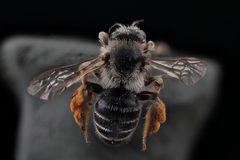
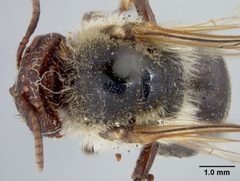
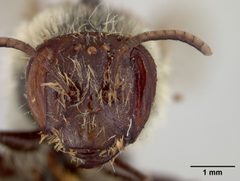
Melitta bees can be distinguished from other solitary by their blunt or rounded antennal tips, a trait reflected in their . They are generally medium-sized bees with relatively sparse body hair compared to many other bee . -level identification typically requires examination of genitalia and other microscopic features.
Images
Habitat
Melitta inhabit a range of temperate and subtropical environments, including grasslands, meadows, and open woodland edges. They are often associated with areas supporting their specific plant requirements.
Distribution
The is primarily distributed across the Palaearctic region, with found throughout Europe, Asia, and North Africa. Three rare species occur in North America. The genus is absent from South America, Australia, and most of the tropics outside Africa.
Diet
Melitta bees feed on nectar and pollen. Larvae are provisioned with pollen and nectar collected from specific plants. The Campanula (Melitta haemorrhoidalis) specializes on Campanula , while the Red Bartsia Bee (Melitta tricincta) collects pollen almost exclusively from Red Bartsia (Odontites vernus).
Host Associations
- Campanula - pollen sourceMelitta haemorrhoidalis specializes on Campanula
- Odontites vernus - pollen sourceMelitta tricincta relies almost exclusively on Red Bartsia
Behavior
Males of Melitta have been observed patrolling in groups with males of Andrena species, a associated with their role as for cuckoo bees in the Nomada. Male Melitta mandibular glands produce chemical compounds identical to those of their Nomada , potentially facilitating chemical mimicry.
Ecological Role
Melitta bees function as important of their specialized plants. Their strict pollen preferences make them key mutualists for certain plant , particularly in the Campanula and Odontites. They also serve as hosts for kleptoparasitic cuckoo bees, particularly Nomada species, forming part of complex ecological networks involving multiple .
Human Relevance
Some Melitta , such as the Red Bartsia (Melitta tricincta), are conservation priorities due to their rarity and specialized requirements. Habitat restoration projects targeting their plants have demonstrated success in expanding . The is of interest to bee researchers studying host- relationships and specialization.
Similar Taxa
- AndrenaBoth are solitary bees that serve as for Nomada cuckoo bees; males of both genera patrol together and share similar body forms, though Andrena typically have more abundant body hair and different antennal structure.
- MacropisBoth are oil-collecting bees with specialized plant associations; however, Macropis collects floral oils from Lysimachia rather than pollen specialization, and belongs to the Melittidae but a different .
Sources and further reading
- BugGuide
- Wikipedia
- iNaturalist taxon
- NCBI Taxonomy
- Catalogue of Life
- entomology | Blog - Part 10
- Surveying for the Red Bartsia Bee - Buglife Blog - Buglife
- Gardening for Solitary Bees - Buglife Blog - Buglife
- The Power of Noticing: my summer with the Wart-biter - Buglife Blog - Buglife
- behaviour | Blog
- biodiversity | Blog - Part 35