
Ashmeadiella xenomastax
Michener, 1939
Square-jawed Angled-Mason
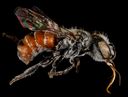
Ashmeadiella xenomastax is a of in the Megachilidae, first described by Michener in 1939. It is known from Central and North America. The "Square-jawed Angled-Mason" refers to distinctive morphological features of the species. Like other members of the Ashmeadiella, it is a solitary that constructs nests using collected materials.
Pronunciation
How to pronounce Ashmeadiella xenomastax: /æʃˌmiːdiˈɛlə ˌziːnoʊˈmæstæks/
These audio files are automatically generated. While they are not always 100% accurate, they are a good starting point.
Identification
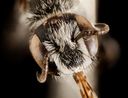
The specific epithet "xenomastax" and "Square-jawed Angled-Mason" suggest distinctive mandibular or capsule , likely involving squared or angular jaw structures that differentiate it from . Detailed diagnostic features require examination of and original description.
Images
Distribution
Recorded from Central America and North America. GBIF records indicate presence in Middle America and North America.
Ecological Role
As a member of Megachilidae, likely functions as a and contributes to pollen collection and plant reproductive services in its range.
Similar Taxa
- Other Ashmeadiella species share general body plan and nesting ; A. xenomastax distinguished by putative mandibular/ implied by name and
More Details
Taxonomic note
The specific epithet "xenomastax" derives from Greek roots: "xeno-" (strange, foreign) and "mastax" (jaw, mouth), referring to unusual jaw . Authorship firmly established as Michener, 1939.
Data scarcity
Only 2 iNaturalist observations documented, indicating this is rarely encountered or underreported. No published biological studies or ecological data located in provided sources.