
Stelis rudbeckiarum
Cockerell, 1904
Coneflower Painted-Dark bee
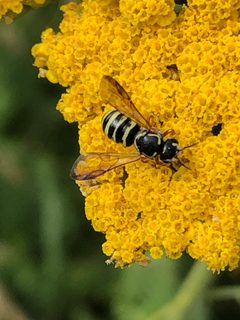
Stelis rudbeckiarum is a of cuckoo bee in the Megachilidae, described by Cockerell in 1904. As a member of the Stelis, it is an obligate that lays its in the nests of other bees. The species is distributed across North America and Central America. Its specific epithet 'rudbeckiarum' suggests an association with Rudbeckia (coneflowers), likely reflecting or foraging relationships.
Pronunciation
How to pronounce Stelis rudbeckiarum: //ˈstɛlɪs rʌdˈbɛkiˌɑːrəm//
These audio files are automatically generated. While they are not always 100% accurate, they are a good starting point.
Identification
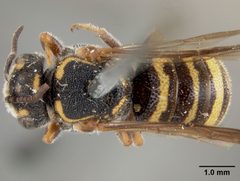
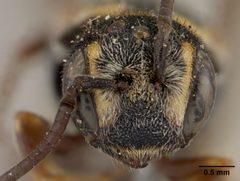
Stelis rudbeckiarum can be distinguished from other Stelis by its specific association with coneflower and distribution across North and Central America. Stelis species generally exhibit dark, often metallic coloration with pale maculations, and reduced scopae (pollen-collecting hairs) due to their cleptoparasitic lifestyle. Definitive identification requires examination of morphological characters such as facial markings, wing venation, and genitalia, ideally by comparison with or keys.
Images
Distribution
North America and Central America. Distribution records indicate presence in both regions, though specific countries or localities are not well documented in available sources.
Host Associations
Ecological Role
As a (cuckoo bee), Stelis rudbeckiarum functions as a in . It does not construct nests or collect pollen, instead exploiting the nesting efforts of bees. This parasitic strategy influences host and may serve as an indicator of healthy host in an .
Human Relevance
The specific epithet 'rudbeckiarum' indicates ecological connection to Rudbeckia (coneflowers), suggesting potential importance in coneflower-associated pollination . However, direct economic or conservation significance for this has not been documented.
Similar Taxa
- Stelis ornatulaAnother rare Stelis ; distinguished by distribution (S. ornatula recorded in Britain and Europe) and likely different associations
- Other Stelis speciesMany Stelis are morphologically similar; S. rudbeckiarum distinguished by North/Central American distribution and putative coneflower association