
Pseudoanthidium nanum
(Mocsáry, 1880)
European Small-Woolcarder
Species Guides
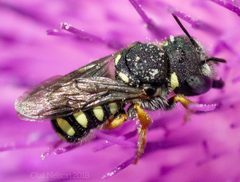
1Pseudoanthidium nanum is a small in the Megachilidae, commonly known as the European Small-Woolcarder. It is a solitary bee that has been introduced to North America from its native range in Europe and Northern Asia. The species is known for collecting plant fibers to line its nest cavities, a characteristic of the woolcarder bees.
Pronunciation
How to pronounce Pseudoanthidium nanum: //ˌsjuːdəʊænˈθɪdiəm ˈneɪnəm//
These audio files are automatically generated. While they are not always 100% accurate, they are a good starting point.
Identification
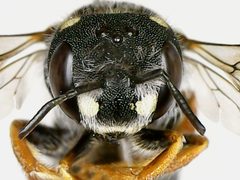
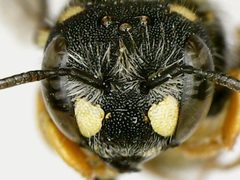
Distinguished from other Pseudoanthidium by its notably small size. Separated from the larger and more widespread Anthidium manicatum (European Woolcarder ) by its smaller stature and less robust build. Identification to species level often requires examination of male genitalia or detailed morphological analysis.
Images
Habitat
Found in open, sunny including gardens, meadows, and disturbed areas with suitable nesting substrates and flowering plants. Uses pre-existing cavities for nesting.
Distribution
Native to Europe and Northern Asia (excluding China); introduced and established in North America. Present across much of Europe, with expanding range in North America following introduction.
Seasonality
active primarily during summer months; specific varies by geographic location.
Behavior
Ecological Role
Solitary that contributes to pollination of flowering plants. As a cavity-nesting , it may compete with native cavity-nesting bees for nest sites in areas where it has been introduced.
Human Relevance
Occasionally noted in gardens and urban green spaces. Its introduced status in North America has attracted interest from researchers monitoring non-native bee establishment.
Similar Taxa
- Anthidium manicatumLarger European woolcarder with more robust build and more extensive pale markings; males are highly territorial and aggressive.
- Pseudoanthidium tenellumAnother small Pseudoanthidium ; separation requires detailed morphological examination.
More Details
Introduction History
The has established in North America, though details of introduction timing and remain incompletely documented.