
Dianthidium arizonicum
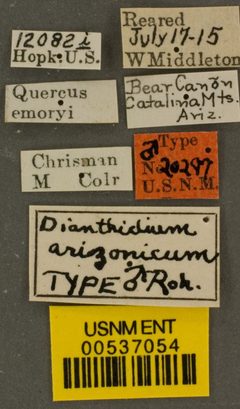
Rohwer, 1916
Arizona Pebble Bee
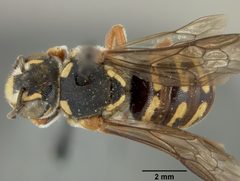
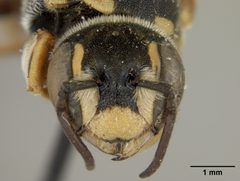
Dianthidium arizonicum is a of resin in the Megachilidae, first described by Rohwer in 1916. It is native to the southwestern United States, particularly Arizona. Like other members of the Dianthidium, it is a solitary bee that constructs nests using plant resins. The species has been documented nesting in artificial bee blocks, indicating adaptability to human-provided nesting structures.
Pronunciation
How to pronounce Dianthidium arizonicum: //ˌdaɪˌænˈθɪdiəm ˌæ.rɪˈzoʊ.nɪkəm//
These audio files are automatically generated. While they are not always 100% accurate, they are a good starting point.
Identification
Dianthidium arizonicum belongs to a characterized by pebble-like nest constructions made from plant resins. Within the genus Dianthidium, identification typically requires examination of morphological details such as the pattern and of pale markings on the , the structure of the scopa (pollen-collecting hairs) in females, and male genitalia. The specific epithet 'arizonicum' indicates its type locality in Arizona, distinguishing it geographically from related species such as D. curvatum and D. pudicum which occur in different regions.
Images
Habitat
Documented from pinyon/juniper woodland in the southwestern United States. Observations indicate occurrence in areas with flowering plants suitable for pollen and nectar collection, including Heterotheca . The species has been recorded nesting in artificial blocks in nature park settings, suggesting use of pre-existing cavities in dead wood or hollow stems in natural conditions.
Distribution
Southwestern United States, with confirmed records from Arizona (type locality) and Utah. The occurs in the Colorado Plateau region and adjacent areas. Distribution records indicate presence in North America with documented observations in Coconino County, Arizona and Kane County, Utah.
Seasonality
Active during summer months. Documented observations from late June, with nesting activity recorded in June. As a solitary , are likely active during the flowering season of their plants.
Diet
feed on nectar from flowers. Females collect pollen using a scopa (brush of hairs on the underside of the ) to provision nest for their larvae. Documented flower visitation includes Heterotheca (showy goldenaster).
Host Associations
- Heterotheca sp. - pollen/nectar sourceDocumented flower visitation by Dianthidium (Dianthidium) sp., likely D. arizonicum given geographic context
Life Cycle
Solitary with typical megachilid nesting . Females construct nests in pre-existing cavities such as hollow twigs or borings in dead wood. Nest are partitioned and sealed using plant resins, forming distinctive pebble-like plugs. Each cell contains a pollen loaf provisioned with regurgitated nectar, upon which an is laid. Larvae develop within sealed cells, with multiple possible per season depending on climate.
Behavior
Females exhibit territorial around nest sites. Documented nesting in artificial blocks indicates adaptability to human-modified environments. The has been observed sharing bee block with other cavity-nesting Hymenoptera including mason wasps (Euodynerus hidalgo) and other megachilid bees. Like other Dianthidium, females are known to create resin plugs at nest entrances, potentially as a defense against .
Ecological Role
of native flowering plants in southwestern North American . As a resin , contributes to nutrient cycling through pollen collection and transfer. Serves as for parasitic including Leucospis affinis ( Leucospidae), which lays in Dianthidium nests. Nesting activities may facilitate secondary cavity use by other organisms.
Human Relevance
Has been documented utilizing artificial blocks (bee condos) installed for conservation, demonstrating value as a target for native bee enhancement. No known agricultural or economic significance. Potential for healthy pinyon/juniper woodland .
Similar Taxa
- Dianthidium curvatumOverlapping geographic range and similar resin-nesting ; distinguished by morphological details of integumental markings and male genitalia
- Dianthidium pudicumCongeneric with similar nesting habits; D. arizonicum distinguished by Arizona type locality and specific morphological characters
- Heriades spp.Other small megachilid bees that nest in pre-existing cavities and use resin in nest construction; distinguished by different body form and scopa structure
More Details
Nesting Biology
Dianthidium are known as 'pebble bees' or 'resin bees' for their distinctive use of plant resins to construct and seal nest . The resin plugs are durable and may persist in cavities for multiple seasons. Females of D. arizonicum have been documented nesting in artificial blocks alongside other solitary bees and , indicating the species benefits from conservation efforts targeting native .
Parasite Interactions
The Dianthidium serves as for parasitic in the Leucospidae, particularly Leucospis affinis. These chalcid wasps are external that lay in host nests; their larvae attach to and consume developing larvae. The presence of D. arizonicum in concentrated nesting (such as bee blocks) may increase vulnerability to compared to dispersed natural nests.