
Acrotaphus fuscipennis
(Cresson, 1865)
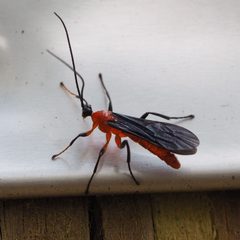
Acrotaphus fuscipennis is a of ichneumon in the Ichneumonidae, first described by Cresson in 1865. The Acrotaphus comprises wasps that attack spiders. A. fuscipennis is one of approximately 8 species in the genus recorded from North America. Like other members of Acrotaphus, this species is presumed to be an ectoparasitoid of orb-weaving spiders (Araneidae), though specific records for A. fuscipennis itself appear to be lacking in published literature.
Pronunciation
How to pronounce Acrotaphus fuscipennis: /əˈkrəʊtəfəs fjuːˈsaɪpɛnɪs/
These audio files are automatically generated. While they are not always 100% accurate, they are a good starting point.
Images
Distribution
North America. The was described from specimens collected in the United States, and records in the UCR Encyrtidae collection (though primarily focused on Encyrtidae) suggest western U.S. occurrence. The related species Acrotaphus wiltii has been recorded from Massachusetts, suggesting eastern U.S. distribution for the as well.
Host Associations
- Araneidae - The Acrotaphus is known to parasitize orb-weaving spiders ( Araneidae). Acrotaphus wiltii has been specifically recorded from Neoscona arabesca. specificity for A. fuscipennis itself is not documented.
Life Cycle
Females locate spiders and sting them into brief paralysis, then lay a single on the spider's body. The larva feeds as an external on the still-living spider. This pattern is documented for Acrotaphus wiltii and inferred for including A. fuscipennis based on -level characteristics.
Behavior
Females are active hunters that search for orb-weaving spiders. Upon encountering a , the stings it to induce paralysis, then oviposits externally on the spider's body before leaving. The wasp does not construct a nest or cache the host.
Ecological Role
of spiders. As a of arachnids, Acrotaphus help regulate spider . They represent one of several hymenopteran lineages that have evolved spider-specific parasitoid strategies.
Similar Taxa
- Acrotaphus wiltiiCongeneric with similar and . A. wiltii differs in distribution (eastern U.S. records) and has documented association with Neoscona arabesca.
- Pepsis spp.Large spider-hunting wasps that also paralyze spiders, but belong to Pompilidae (tarantula hawks). Pepsis are generally larger, more colorful, and cache in burrows rather than acting as external .
- Sceliphron caementariumBlack and Yellow Mud Dauber (Sphecidae) also hunts spiders, but is a that stocks mud nests with multiple paralyzed prey items for larval provisioning, differing from the external strategy of Acrotaphus.
More Details
Taxonomic History
The was described by Ezra Townsend Cresson in 1865. Cresson was a prominent American entomologist who described numerous hymenopteran in the mid-19th century. The specific epithet 'fuscipennis' refers to the dark or dusky wing coloration.
Collection Records
The UCR Entomology Research Museum holds specimens of Acrotaphus fuscipennis, though the collection is primarily noted for its Encyrtidae holdings. The presence of this in such collections indicates it has been encountered in western U.S. collecting efforts, particularly those targeting .
Sources and further reading
- BugGuide
- GBIF taxonomy match
- iNaturalist taxon
- Catalogue of Life
- Encyrtid Holdings | Entomology Research Museum
- Buprestidae | Beetles In The Bush | Page 10
- Bug Eric: Spider Sunday: Spider Enemies
- When is an ant not an ant? When it’s a jumping spider, of course! | Beetles In The Bush
- jewel beetles | Beetles In The Bush | Page 9