
Perithous septemcinctorius
(Thunberg, 1822)
Perithous septemcinctorius is a in the Ichneumonidae, Pimplinae. The is known from detailed morphological descriptions of its final instar larva, which exhibits distinctive features including maxillary and labial palpi with more than two . It is recorded from Belgium and Norway. As a member of the Perithous, it is presumed to be a parasitoid, though specific associations for this species remain poorly documented.
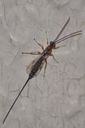
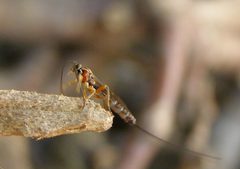
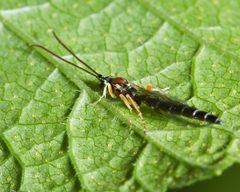
Pronunciation
How to pronounce Perithous septemcinctorius: /pɛˈrɪθuːs sɛptɛmˌkɪnkˈtɔːrɪəs/
These audio files are automatically generated. While they are not always 100% accurate, they are a good starting point.
Identification
Larval distinguished from Perithous divinator and P. scurra by specific combinations of: spinule presence on tegument; antennal orbit ; cardo sensillum; stipital seta; setal counts on , , , postlabium; sensilla counts on clypeus and labrum; epistoma development; sensilla number on maxillary and labial palpi (all three Perithous have >2 sensilla); and /salivary orifice differentiation. presumably identifiable to by standard Ichneumonidae morphological characters, but species-level adult requires examination.
Images
Distribution
Recorded from Belgium (including Brussels-Capital, Flemish, and Walloon regions) and Norway. Distribution data are sparse; broader European range likely but unconfirmed.
Life Cycle
Final instar larva described; represents terminal feeding stage before . Complete details unknown. As a , development presumably involves , larval (multiple instars), pupal, and stages with parasitoid lifestyle, but specific details unrecorded.
Ecological Role
Presumed based on and placement, but specific role undocumented.
Similar Taxa
- Perithous divinatorLarval distinguished by spinule presence/absence on tegument, antennal orbit , cardo sensillum, stipital seta, and setal/sensillar counts on mouthparts and cranial sclerites.
- Perithous scurraLarval distinguished by same suite of characters: spinules, presence/absence, setal counts, epistoma development, and palpal sensilla number.
- Zatypota bohemaniDescribed in same larval study; distinguished by stipital expansion at lateral end and different setal arrangement on cranial sclerites and mouthparts.
- Zatypota gracilisDescribed in same larval study; distinguished by stipital expansion at lateral end and different setal arrangement on cranial sclerites and mouthparts.
More Details
Larval Morphology Study
The only detailed study of this focused exclusively on final instar larval using light and scanning electron microscopy. No information is available on , , , or beyond taxonomic placement.