
Perithous scurra
(Panzer, 1804)
Species Guides
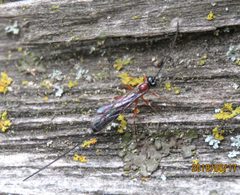
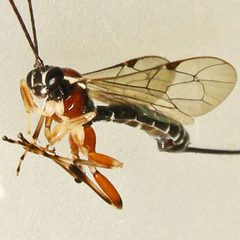
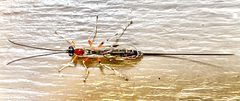
2Perithous scurra is a of ichneumon in the tribe Delomeristini, Ichneumonidae. The species was first described by Panzer in 1804. Five are recognized, including the nominate subspecies P. scurra scurra and regional forms such as P. s. japonicus and P. s. neomexicanus. The final instar larva has been described and can be distinguished from by specific morphological characters of the .
Pronunciation
How to pronounce Perithous scurra: //pɛˈrɪθuːs ˈskʊ.ra//
These audio files are automatically generated. While they are not always 100% accurate, they are a good starting point.
Identification
Final instar larvae can be distinguished from other Perithous by the presence of more than two on the maxillary and labial palpi, combined with specific character states including: presence or absence of spinules on the tegument, sensillum on antennal orbit and cardo, seta on part of stipital , number of setae on , , and postlabium, degree of development of epistoma, and differentiation of the and salivary orifice.
Images
Distribution
Recorded from Belgium (including Brussels-Capital Region, Flemish Region, and Walloon Region) and Edmonton, Canada. The presence of P. s. japonicus and P. s. neomexicanus suggests broader geographic distribution including Japan and the southwestern United States.
Life Cycle
The mature larva is characterized by presenting the maxillary and labial palpi with more than two . Final instar larvae produce with diagnostic morphological characters that allow -level identification within the .
Similar Taxa
- Perithous septemcinctoriusFinal instar larvae can be differentiated from P. scurra based on presence/absence of spinules on tegument, specific setal arrangements on mouthparts, and epistoma development.
- Perithous divinator differ in characters including seta number on , , and postlabium, and arrangement on clypeus and labrum.