
Rhynchophion
Enderlein, 1912
Species Guides
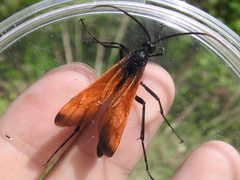
2Rhynchophion is a of ichneumon wasps in the Ophioninae. The genus contains only three known , with Rhynchophion flammipennis being the most documented. These exhibit striking coloration—black or metallic blue bodies with bright orange or red wings—resembling tarantula hawks (Pepsis spp.), which may represent Müllerian mimicry given that Ophioninae can sting in self-defense using their short, sharp ovipositors. Unlike most Ophioninae, Rhynchophion species are and visit flowers for nectar.
Pronunciation
How to pronounce Rhynchophion: //rɪnˈkɒfiən//
These audio files are automatically generated. While they are not always 100% accurate, they are a good starting point.
Identification
Rhynchophion can be distinguished from most other Ophioninae by their activity and distinctive color pattern of black or metallic blue body with bright orange or red wings, resembling tarantula hawks. The is characterized by features typical of tribe Enicospilini. color appears variable (black in some specimens, possibly sexually dimorphic). Positive identification to species level requires expert examination.
Images
Distribution
Arizona (USA), Mexico, Nicaragua, and Ecuador. The is primarily tropical, with Rhynchophion flammipennis occurring at the northern edge of its range in the Sonoran Desert region of southern Arizona.
Host Associations
- Manduca sexta - Tobacco Hornworm; confirmed for R. flammipennis. Female injects into young caterpillar; larva develops as koinobiont endoparasitoid, killing host before .
Life Cycle
Koinobiont endoparasitoid development: female locates young caterpillar and injects into its body. The larva emerges and feeds internally while allowing the host to continue growing and maturing. The larva delays intensive feeding until the caterpillar nears , then destroys it. The wasp larva spins a dense silken cocoon and pupates in the host's underground pupal chamber in the soil.
Behavior
activity (unusual for Ophioninae, which are typically ). visit flowers for nectar. When disturbed or threatened, can use short, sharp ovipositor to sting in self-defense.
Ecological Role
agent of sphinx moth caterpillars (Sphingidae). As a koinobiont , regulates by killing caterpillars before they reach reproductive adulthood.
Human Relevance
Potential benefit in agricultural and garden contexts through natural suppression of (Manduca spp.) that damage tomato, tobacco, and other solanaceous crops. No documented negative impacts on humans; capable of defensive sting but not considered dangerous.
Similar Taxa
- Pepsis spp. (tarantula hawks)Similar black/metallic blue body with orange or red wings; Rhynchophion flammipennis coloration closely resembles tarantula hawks, possibly Müllerian mimicry. Tarantula hawks are larger, have different body proportions, and are in Pompilidae rather than Ichneumonidae.
- Other OphioninaeMost other Ophioninae are and lack the bright warning coloration of Rhynchophion; require expert examination for definitive separation.
More Details
Mimicry system
The color resemblance to tarantula hawks may represent Müllerian rather than , as Ophioninae possess functional stinging capability using their ovipositors for defense.
Research needs
Much remains unknown, including: full range (other sphinx moth likely used), whether color varies by sex, and basic of the two other described species in the .