
Trogus fulvipes
Cresson, 1868
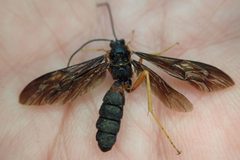
Trogus fulvipes is a of ichneumonid described by Cresson in 1868. The Trogus comprises wasps that attack lepidopteran larvae, particularly swallowtail butterflies (Papilionidae). Trogus fulvipes has been documented in southern Canada and California, with specimen records from locations including Waterton and Aweme. Like other members of its genus, this species is presumed to be a koinobiont endoparasitoid of caterpillars, though specific records for T. fulvipes are not well documented.
Pronunciation
How to pronounce Trogus fulvipes: //ˈtrɒɡəs ˈfʊl.vɪˌpiːz//
These audio files are automatically generated. While they are not always 100% accurate, they are a good starting point.
Identification
Trogus are generally robust ichneumonids with distinctive coloration patterns. Trogus fulvipes can be distinguished from by the specific combination of its fulvous (tawny) legs, as indicated by the species epithet, and its documented distribution in western North America. Separation from other Trogus species requires examination of detailed morphological characters including , wing venation, and propodeal . The Trogus is characterized by a relatively broad and that are twisted, adaptations associated with their specialized lifestyle.
Images
Distribution
Southern Canada (including Alberta, Manitoba) and California, USA. Specific locality records include Waterton, Aweme, and unspecified locations across southern Canada.
Ecological Role
Presumed of lepidopteran larvae, contributing to of . The Trogus is known to parasitize Papilionidae, suggesting potential role in .
Similar Taxa
- Other Trogus speciesTrogus fulvipes is part of a of approximately 10-12 , primarily distinguished by coloration, distribution, and subtle morphological differences. T. pennator and T. lapidator are Palaearctic species with different leg coloration and geographic ranges.
- Therion speciesAnother ichneumonid with similar on Lepidoptera; distinguished by different wing venation and facial characteristics.
More Details
Nomenclature
Authored by Ezra Townsend Cresson in 1868, with the name 'fulvipes' referring to the tawny or yellowish-brown legs.
Collection History
Specimens of Trogus fulvipes are present in major North American entomological collections, including the Canadian National Collection based on distribution records.