
Trogus pennator
(Fabricius, 1793)
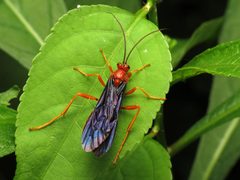
Trogus pennator is a in the Ichneumonidae that attacks larvae of swallowtail butterflies (Papilionidae), particularly in the Eurytides and Papilio. Females locate using chemical cues from larval and feeding damage. The is deterred from parasitizing Battus philenor due to aristolochic acid by that host. It has been recorded in North America including Vermont.
Pronunciation
How to pronounce Trogus pennator: //ˈtroʊ.ɡəs pɛnˈneɪ.tɔr//
These audio files are automatically generated. While they are not always 100% accurate, they are a good starting point.
Identification
Trogus pennator can be distinguished from other Trogus by its associations and geographic distribution. Specific morphological diagnostic features are not documented in available sources.
Images
Habitat
Occurs in diverse where plants grow, including areas with plants in multiple used by Papilionidae as food sources.
Distribution
Recorded from North America, including Vermont, United States. The Trogus pennator argutus is recognized.
Host Associations
- Eurytides (Papilionidae) - of larvaeConfirmed ; naive females innately respond to host and feeding damage cues
- Papilio (Papilionidae) - of larvaeConfirmed ; includes P. machaon (Old World swallowtail)
- Battus philenor - rejected Larvae are rejected due to chemical defense; aristolochic acids deter attack and offspring cannot survive
Behavior
Females exhibit innate preference for plants damaged by larvae over plants damaged by nonhost larvae, and prefer host extracts over nonhost frass extracts. Naive females show no innate preference for specific food plants but develop learned preferences after experience with hosts. Host-finding involves searching responses to frass and feeding damage cues.
Ecological Role
of larvae; contributes to of Papilionidae in the Eurytides and Papilio. Behavioral and physiological barriers prevent of chemically defended Battus philenor.
Similar Taxa
- Other Trogus speciesShare similar lifestyle on swallowtail butterflies; distinguished by range and geographic distribution
More Details
Chemical Ecology
Aristolochic acids sequestered by Battus philenor larvae act as a behavioral deterrent to T. pennator females and create a physiological barrier preventing offspring survival, representing a multi-layered defense system.
Learning Behavior
T. pennator demonstrates flexible learning for plant cues (developed through experience) alongside fixed innate responses to -derived chemical cues (, feeding damage), indicating a dual mechanism for host location.
Sources and further reading
- BugGuide
- Wikipedia
- GBIF taxonomy match
- iNaturalist taxon
- NCBI Taxonomy
- Catalogue of Life
- Experimental Studies of the Host-Finding Behavior of Trogus pennator, a Parasitoid of Swallowtail Butterflies
- Chemical defence of Battus philenor larvae against attack by the parasitoid Trogus pennator
- The natural history of the parasitic waspTrogus pennator(Hymenoptera: Ichneumonidae): Host‐finding behaviour and a possible host countermeasure