
Syrphoctonus
Förster, 1869
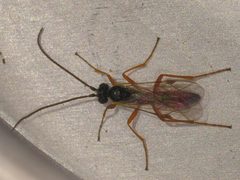
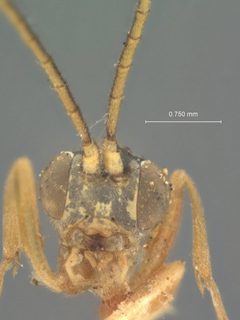
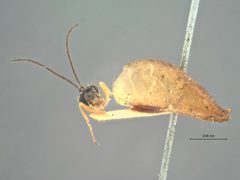
Syrphoctonus is a of ichneumonid wasps in the Diplazontinae. The genus contains numerous worldwide, with over 30 species recorded from Europe. Members are of hoverflies (Syrphidae). The genus name derives from Greek 'Syrpho-' (gnat) and '-ctonus' (killer), referring to this association.
Pronunciation
How to pronounce Syrphoctonus: //sɜːrfˈɒktənəs//
These audio files are automatically generated. While they are not always 100% accurate, they are a good starting point.
Identification
Separation from the closely related Homotropus has been historically problematic; several originally described in Syrphoctonus have been transferred to Homotropus based on revised generic concepts. Diagnostic features for distinguishing Syrphoctonus from Homotropus require examination of detailed morphological characters not specified in available sources.
Images
Distribution
distribution with records from Europe (more than 30 ), Asia (Japan: two species), and North America. GBIF records include Denmark, Norway, and Sweden.
Host Associations
- Syrphidae - Members of Syrphoctonus are on hoverflies
Behavior
Males of at least one (S. tarsatorius) exhibit antennal courtship involving specialized tyloid structures on the that function as contact structures during mating.
Ecological Role
As of hoverflies, members of this contribute to of their dipteran . Hoverfly larvae are often , so Syrphoctonus may indirectly influence aphid through trophic cascades.
Similar Taxa
- HomotropusHistorically confused with Syrphoctonus; multiple have been transferred between these , and they share similar and associations (both are diplazontine of hoverflies). Separation requires detailed morphological analysis.
More Details
Taxonomic instability
The generic boundaries between Syrphoctonus and Homotropus have undergone significant revision. Recent taxonomic work has transferred multiple from Syrphoctonus to Homotropus, including S. infuscatus, S. kuroashii, S. momoii, S. spinosus, S. enizemopsis, and S. tenuitibialis.
Etymology
The name combines Greek 'syrphos' (gnat, referring to hoverflies) and 'ktonos' (killer), directly referencing the relationship with syrphid flies.
Sources and further reading
- BugGuide
- Wikipedia
- GBIF taxonomy match
- iNaturalist taxon
- NCBI Taxonomy
- Catalogue of Life
- Review of the genera Homotropus Förster and Syrphoctonus Förster (Hymenoptera, Ichneumonidae, Diplazontinae) from Japan
- Antennal courtship and functional morphology of tyloids in the parasitoid wasp Syrphoctonus tarsatorius (Hymenoptera: Ichneumonidae: Diplazontinae)