
Ctenopelma
Holmgren, 1857
Species Guides
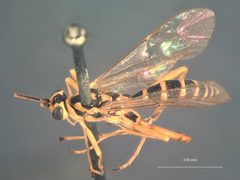
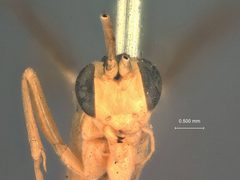
1Ctenopelma is a of in the Ichneumonidae, Ctenopelmatinae. in this genus are koinobiont endoparasitoids of larvae (). The genus has been recorded across the Holarctic region, with multiple species described from China and records from Europe including Denmark, Norway, and Sweden. associations include sawflies in the families Cephaliidae, Pamphiliidae, and .

Pronunciation
How to pronounce Ctenopelma: //ˌktɛ.nəˈpɛl.mə//
These audio files are automatically generated. While they are not always 100% accurate, they are a good starting point.
Images
Habitat
Middle to high elevation mountainous areas (1200–3450 m); climatic conditions similar to temperate regions even at subtropical latitudes. Associated with supporting fern-feeding and conifer-feeding .
Distribution
Holarctic region primarily. China: Ningxia Hui Autonomous Region, Liaoning, Beijing, Henan, Shanxi, Shan'xi, Jilin, Heilongjiang provinces. Europe: Denmark, Norway, Sweden, Austria. Records suggest affinity for northern temperate and montane environments.
Host Associations
- Cephalcia lariciphila - for C. nigrum, C. rufofasciatum, C. pineatum, C. spiraculare
- Acantholyda posticalis - for C. pineatum
- Neurotoma sibirica - for C. tomentosum; new host record
- Blasticotoma filiceti - for Seleucus cuneiformis (related in Ctenopelmatinae)
Life Cycle
Koinobiont endoparasitoid of larval . Development occurs within living larvae. timing appears linked to host emergence; in one related , adults emerged 4 weeks after host and continued for two weeks.
Behavior
Females possess elongated metasoma adapted for oviposition into galls or concealed larval chambers. In at least one related , females exhibit morphological change shortly after : metasoma expands from initial droplet-shaped (male-like) form to elongated form typical of females.
Ecological Role
of larvae, contributing to of phytophagous sawflies including pests of conifers and ferns. May influence structure of forest and montane through suppression.
Human Relevance
Some have been reared from pests of larch (Cephalcia lariciphila) and pine, suggesting potential as agents for conifer pest management. No direct negative impacts on humans recorded.
Similar Taxa
- SeleucusBoth belong to Ctenopelmatinae and share koinobiont endoparasitoid on larvae. Distinguished by morphological features and associations; Seleucus includes with particularly rare host relationships such as fern-feeding sawflies.
- AlexeterRelated in tribe Mesoleiini with similar as koinobiont endoparasitoids of larval . Distinguished by morphological characters and geographic distribution patterns.
More Details
Taxonomic notes
The Ctenopelma is the type genus of Ctenopelmatinae. Recent taxonomic work from China has expanded known significantly, with five new described in 2019. The genus exhibits classic Holarctic distribution patterns with tropical/montane disjunctions, consistent with its .
Research gaps
of most Ctenopelma remains poorly known. Detailed ranges, specificity, and seasonal are documented for few species. The 2019 Chinese revision provides the most comprehensive regional treatment but focuses on rather than .
Sources and further reading
- BugGuide
- GBIF taxonomy match
- iNaturalist taxon
- NCBI Taxonomy
- Catalogue of Life
- Peculiar parasitoid wasp found on rare sawfly developing in ferns | Blog
- The species of Ctenopelma Holmgren (Hymenoptera, Ichneumonidae) from China
- A taxonomic revision of the genus Alexeter Förster (Hymenoptera, Ichneumonidae, Ctenopelmatinae, Mesoleiini) from Taiwan, with descriptions of six new species.