
Anomalonini
Genus Guides
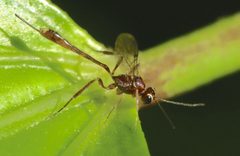
1Anomalonini is a tribe of in the Ichneumonidae, Anomaloninae. The tribe is dominated by the large *Anomalon*, with *Neogreeneia* sometimes recognized as a second genus. Members are koinobiont endoparasitoids of lepidopteran larvae. The tribe contains approximately 5,600+ documented observations, indicating moderate research attention.
Pronunciation
How to pronounce Anomalonini: /ˌænəˌmælɵˈniːnaɪ/
These audio files are automatically generated. While they are not always 100% accurate, they are a good starting point.
Identification
Members of Anomalonini can be distinguished from other Anomaloninae tribes by features of the *Anomalon*: fore wing with areolet absent or reduced, metasoma laterally compressed with tergites 2-4 into a single movable unit, and long, multi-segmented . Separation from *Neogreeneia* (when recognized as valid) relies on subtle differences in wing venation and propodeal .
Images
Distribution
distribution, with records from North America, South America, Europe, Asia, Africa, and Australia. Individual distributions vary; many *Anomalon* species are widespread in temperate and tropical regions.
Diet
Larval are primarily Lepidoptera ( and butterflies), with larvae feeding internally on host tissues. do not feed on hosts; nectar feeding has been observed in some ichneumonids but specific records for Anomalonini are sparse.
Host Associations
- Lepidoptera - koinobiont endoparasitoid of larvae
Life Cycle
Koinobiont endoparasitoid development: female oviposits into larva, larva develops internally while host continues feeding and growing, typically from host pupa or late instar larva. Specific timing varies by and host.
Ecological Role
of Lepidoptera through . Contributes to natural in agricultural and natural .
Human Relevance
Potential biocontrol agents for pest Lepidoptera, though not as widely utilized commercially as some other ichneumonid groups. Research interest in their specificity and .
Similar Taxa
- TherioniniAlso in Anomaloninae; distinguished by presence of areolet in fore wing and different metasomal structure
- IchneumoniniSimilar general appearance but in Ichneumoninae; distinguished by different wing venation patterns and ovipositor structure
More Details
Taxonomic Uncertainty
The tribal composition remains unsettled; *Neogreeneia* has been treated as a synonym of *Anomalon* by some authors and as a valid by others. This affects counts and generic assignments.
Observation Bias
High iNaturalist observation count (5,632) reflects both genuine abundance and identification accessibility; many records are from North America and Europe, with underrepresentation from tropical regions where diversity is likely higher.