
Proceratium croceum
(Roger, 1860)
Proceratium croceum is a small, cryptic in the Proceratiinae. It belongs to a of specialized that exhibit unusual foraging . The species is known from limited observations in the eastern United States. Like other Proceratium species, it likely possesses a distinctive elongated petiole and modified for capturing specific prey.
Pronunciation
How to pronounce Proceratium croceum: /proʊˈsɛrətiəm ˈkroʊsiəm/
These audio files are automatically generated. While they are not always 100% accurate, they are a good starting point.
Identification
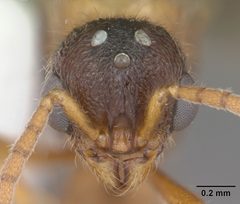
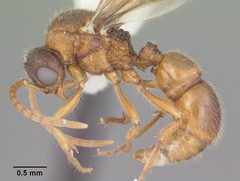
Members of Proceratium are distinguished from other ants by their elongated, cylindrical petiole and the absence of a metapleural gland orifice. P. croceum can be separated from by coloration and geographic distribution, though precise diagnostic features require examination of . The is characterized by a 4-4-4 tarsal formula and reduced palp segmentation. are small, typically under 4 mm, with a compact mesosoma and a distinctly waist.
Images
Distribution
Eastern United States, specifically recorded from the Nearctic region. The appears to have a restricted range with scattered records.
Behavior
Proceratium are known as "dracula ants" for their habit of feeding on the of their own larvae, a termed non-destructive . Whether P. croceum exhibits this specific behavior has not been directly observed. The is characterized by slow, deliberate movement and cryptic foraging in soil and leaf litter.
Similar Taxa
- Proceratium silaceumOverlapping distribution in eastern North America; distinguished by subtle differences in coloration and pilosity, requiring microscopic examination
- DiscothyreaShares elongated petiole and cryptic habits, but Discothyrea has a 2-segmented antennal club and different mandibular structure